

The complete guide
How to Choose and Install Stainless Steel Bird Spikes: The Complete Guide
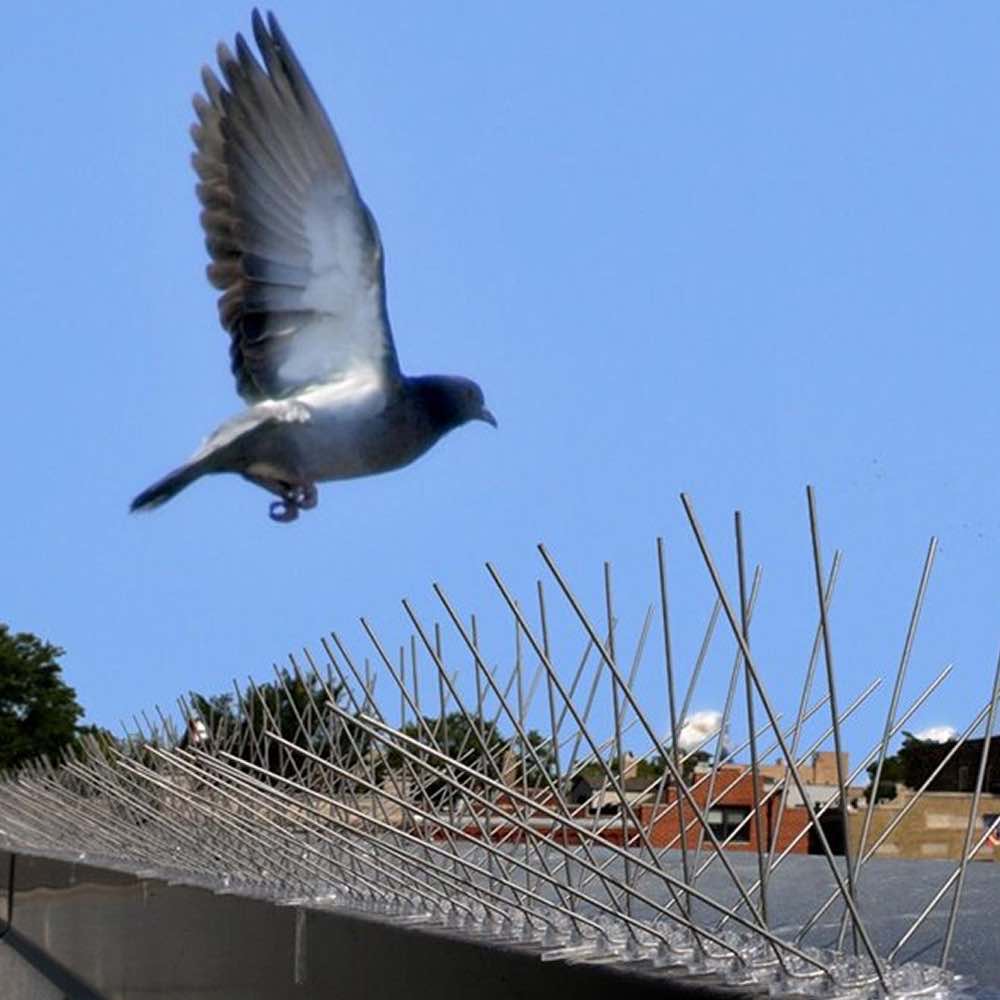
Gulls camped on the parapet, pigeons on the ridge, droppings baked onto the render by lunchtime. If your building cops real weather and real bird pressure, this is the product page you were looking for. This guide explains when stainless steel is worth it, how much to order and how to fit the strips so you never have to think about them again.
Why Stainless Steel?
All spike strips work the same way. A bird needs a flat, steady place to stand, the wires take that away, and the bird moves on. The difference between products is not the trick, it is how long the trick keeps working in the conditions you bolt it into.
That is where the best stainless bird spikes pull ahead. The wires on these strips are 304 stainless steel, a grade chosen for rust resistance, set into a clear polycarbonate base that is UV-stable. Salt air, storms, weeks of 40 degree sun, none of it asks much of stainless. There are no batteries or refills, and no plastic prongs slowly going chalky on a west-facing wall. Fit the strips once and they get on with the job.
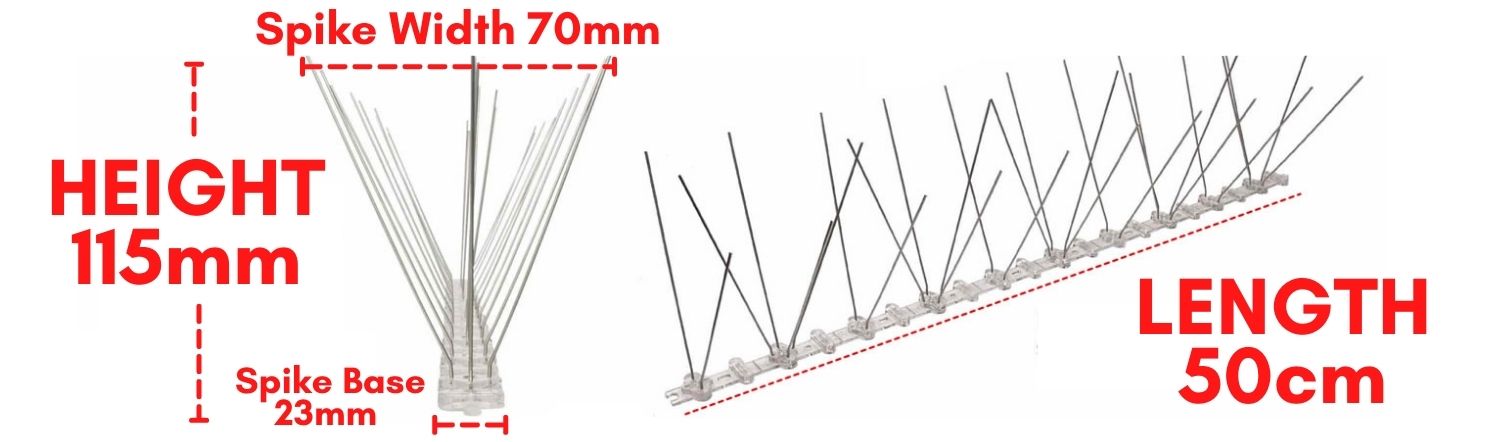
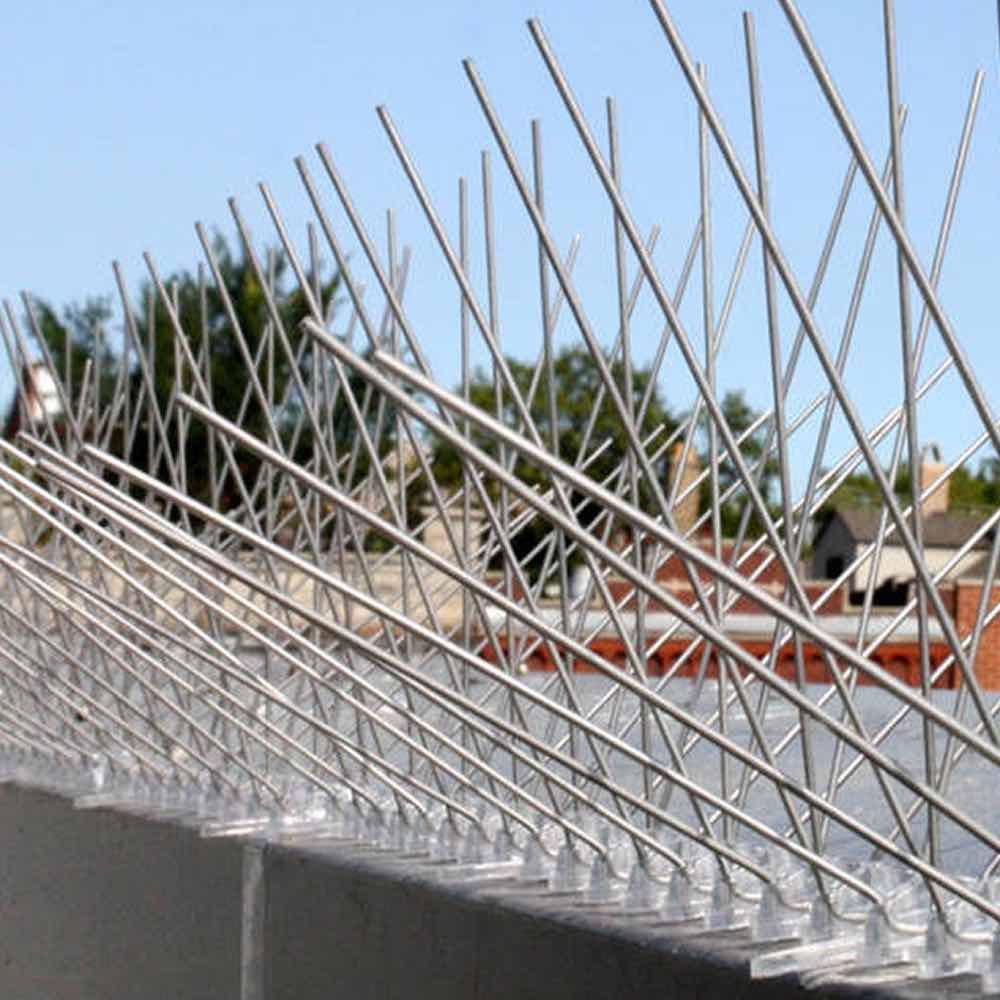
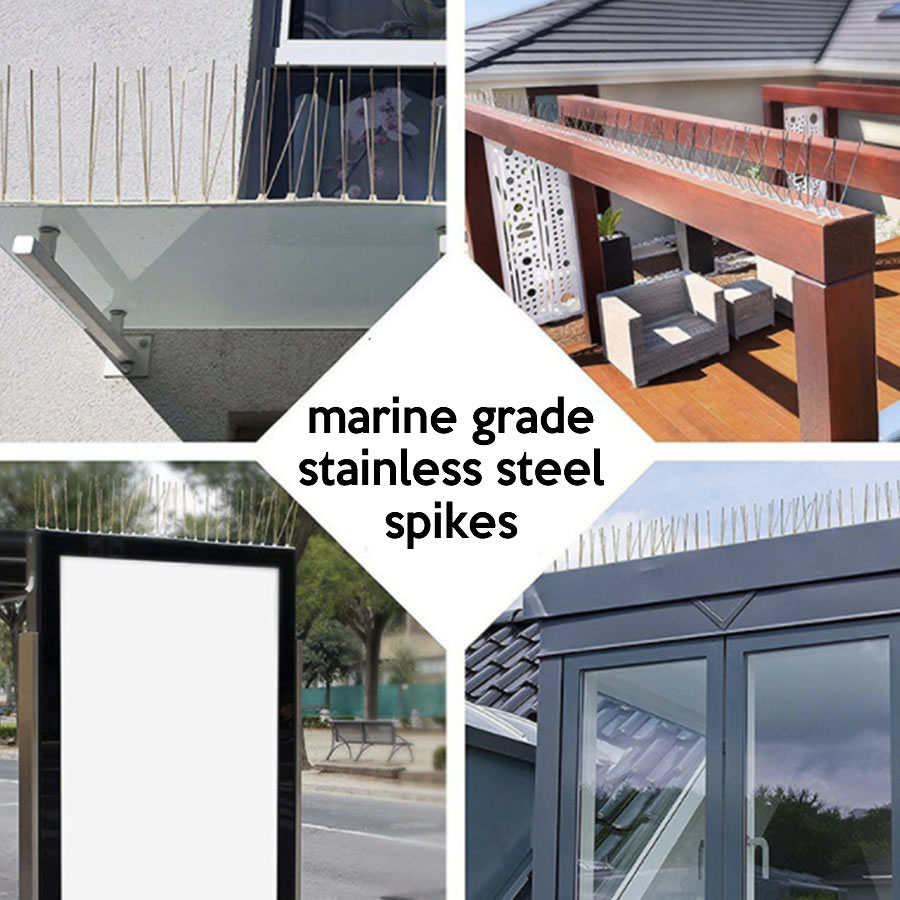
There is a bonus most people do not expect. The wires are about 1.3 mm thin and the base sits under 5 mm tall, so from the footpath the strips are close to invisible. Chunky spikes can make a nice shopfront look like a fortress. Fine stainless wire does not.
Know Your Bird
Match the tool to the pest before you spend a dollar. These strips are at their best against pigeons, doves, starlings, mynas and gulls, which covers almost every bird that loiters on ledges and rooflines.
Gulls deserve a special mention. They are big, bold and relentless around coastal towns, and lightweight deterrents often just become something new for them to stand next to. The best bird spikes for gulls are metal ones with proper coverage, usually in double or triple rows on the wide ledges gulls prefer. If you have been searching for the best seagull spikes for a beach house or a jetty-side cafe, that is the setup to buy.
The honest caveat is small birds. Sparrows and swallows can sometimes tuck themselves between wires, so if your problem is tiny birds in a tight corner, netting or gel will serve you better than any spike.
Stainless or Plastic? A Straight Answer
We sell both, so there is no reason to spin you. Hard plastic spikes cost less, take paint well and are fine for most suburban homes. If you need to clear pigeons off a sheltered window sill, plastic will very likely do it, and your wallet will thank you.
Stainless steel is the upgrade for hard sites. Choose it when the strips will live near the coast, face brutal sun, sit on a commercial building where nobody will check on them, or carry heavier bird pressure from gulls and big flocks. It is also the pick where looks matter, because the thin wires and clear base vanish at a distance. Think of it this way. Plastic is the right answer to a pigeon problem. Stainless is the right answer to a pigeon problem on a salt-sprayed, sun-blasted roof you never want to climb again.
Measuring Up
Each strip is 50 cm long and each metre contains two strips, so the maths is quick. Walk the property and find every spot the birds actually use. Droppings are your map, but remember they fall, so look up from the stain to find the perch. Measure each run in metres and add roughly ten percent for cuts, corners and overlaps, then choose the pack that covers the run.
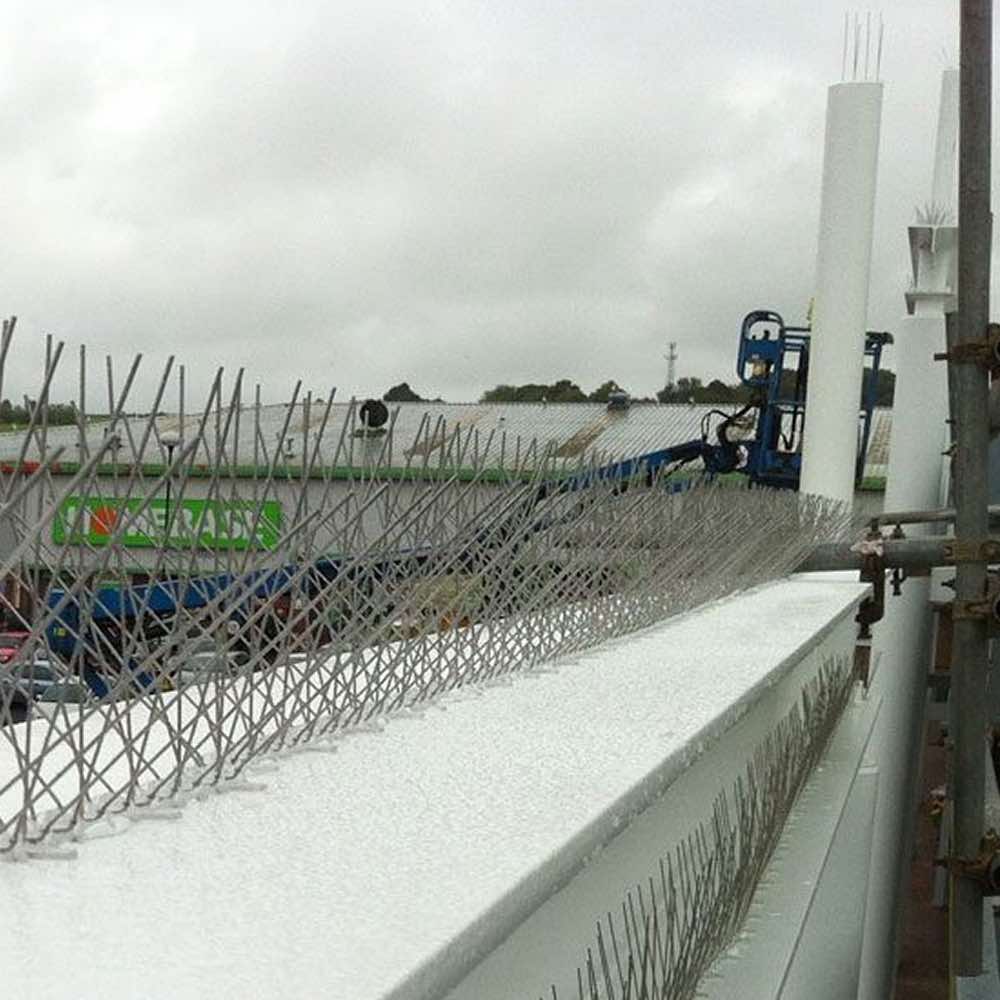
Then check depth. A single row protects about 6.3 cm of width, which suits narrow edges. Anything deeper than about 10 cm needs two or even three parallel rows, because a gull or pigeon will happily land in the calm zone behind a single front row. Wide parapets on commercial buildings are the classic case, and they are why the best commercial bird spikes are usually ordered in multiples of what the front edge alone would need.
Where to Fit Them
Put strips where birds land, not where the mess ends up. The usual suspects are ridge capping, parapet edges, window sills, signs, beams, security cameras, gutter edges, rails and awnings.
A few placements deserve their own note. For a roof, the best bird spikes for roof ridge lines follow the curve of the capping, which the flexible base here does without a fight. The best bird spikes for ledges go right at the front edge, with extra rows behind on deep ledges. The best bird spikes for gutters sit so the wires deny the gutter lip without damming leaves. On solar panels, run strips along the exposed edges and pair them with solar mesh if birds are getting underneath. And for shop signs and parapets, remember the clear base reads as nothing from the street, which is why these are also the best bird spikes for signs on a building you actually want people to look at.
Installation, Step by Step
First, clean up. Old droppings tell birds this spot is home, and they can carry bacteria, so wear gloves and a mask, scrub the surface and let it dry. Adhesive will not grip a dusty or damp ledge.
Second, choose your fixing. A bead of UV-stabilised outdoor silicone adhesive is the standard for masonry, tile, metal, glass and painted surfaces. Screws or nails suit timber fascias and beams. Cable ties are made for rails, pipes and camera mounts, and they are the renter-friendly choice since they come off without a trace.
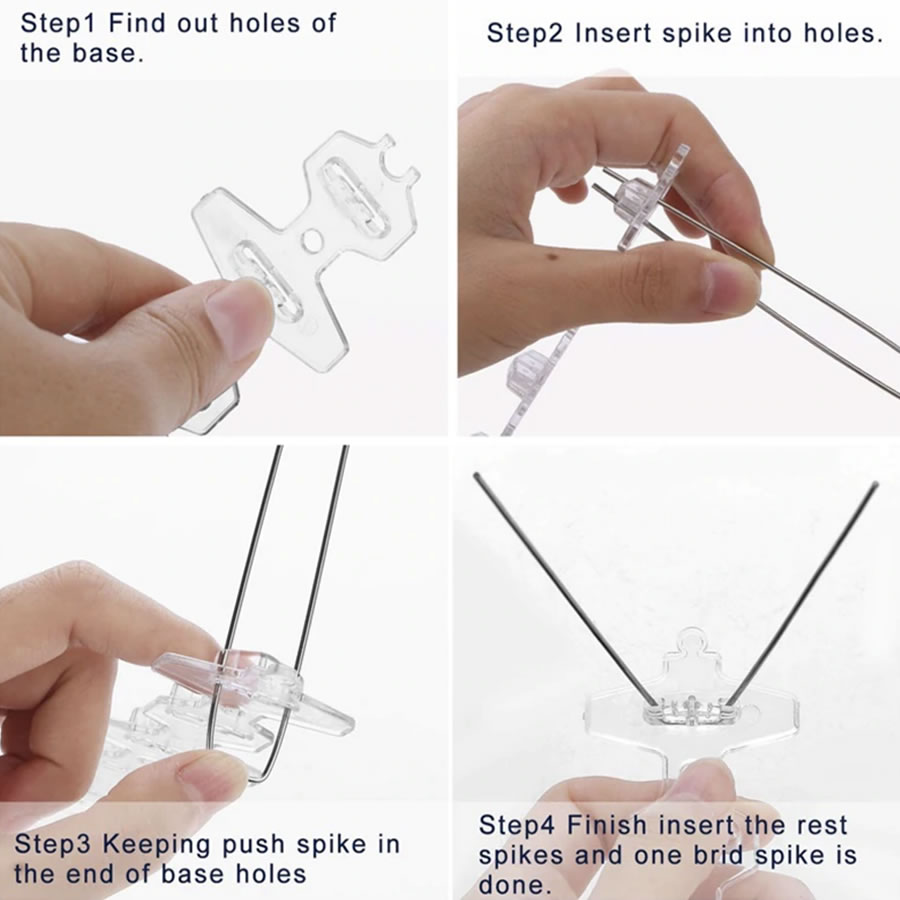
Third, work the run with no gaps. Birds are experts at finding the one bare corner you left. Butt strips against each other, finish hard against walls, and cut the last strip to length with snips rather than leaving a space. On curved or uneven surfaces, let the flexible base follow the shape before the adhesive sets. One of our reviewers screwed his strips to a pagoda and trimmed sections down to fit, and that is exactly the sort of job an afternoon covers.
Coastal Homes and Harsh Sun
Salt air is the quiet killer of outdoor hardware. It streaks painted steel, pits cheap fasteners and turns brittle plastic to confetti. If you are hunting for the best bird spikes for coastal homes, the whole case for stainless is right there. 304 stainless wire is highly rust-resistant, the polycarbonate base is UV-stable, and there is nothing on the strip that needs a protective coating to survive.
Inland heat is the other test. Summer roof temperatures are savage on materials, so the base matters as much as the wires. UV-stable polycarbonate keeps its flex and grip on the fixings instead of chalking and cracking after a couple of summers.
Commercial Sites and Heavy Pressure
On a warehouse, carpark or shopping strip, the true cost of a bird deterrent is the second visit. Scaffolds, cherry pickers and roof access permits all cost more than the product ever did. So facility managers standardise on stainless strips. They go up once, handle flocks of pigeons and the odd gang of gulls, and do not appear on next year's maintenance list.
The same logic applies at home in miniature. If reaching the perch means hiring a ladder tall enough to scare you, fit the material you will never have to revisit. The best metal bird spikes are the ones you forget you own.
Humane and Legal
Spike strips deter by inconvenience, not injury. The wire tips are blunt, and the whole design works by denying a landing rather than punishing one. Birds stay safe, they just stop being your problem.
Australian native birds are protected by law, so keep two rules in mind. Never harm a bird, and never disturb an active nest with eggs or chicks. If a nest is occupied, wait for the young to fledge or check your state wildlife guidance, then clean the ledge and fit the strips before the next season starts. Blocking an empty perch is always fine, and it is the kindest time to act.
Aftercare
There is not much of a job here, which is the point. Brush off leaves and cobwebs now and then so the wires stay exposed, and hose off any droppings that land during the changeover period. No repainting and no parts to swap.
The Bottom Line
Pick stainless when the site is harsh, coastal, commercial or gull-prone, and when you want the spikes to be invisible from the street. Measure every perch, add ten percent, choose the closest pack and fit the strips with no gaps using adhesive, screws or cable ties. Packs start at $13.20 per metre, with better per-metre value at 10, 20 and 30 metres.