
Bird Spikes Australia
Company
Shop By Category
T&Cs
Shop Online

Bird Deterrent Discs | Reflective Bird Repellent Discs | Bird Scare Discs

Send pest birds somewhere else with reflective bird deterrent discs that flash, spin and scare without touching a feather.

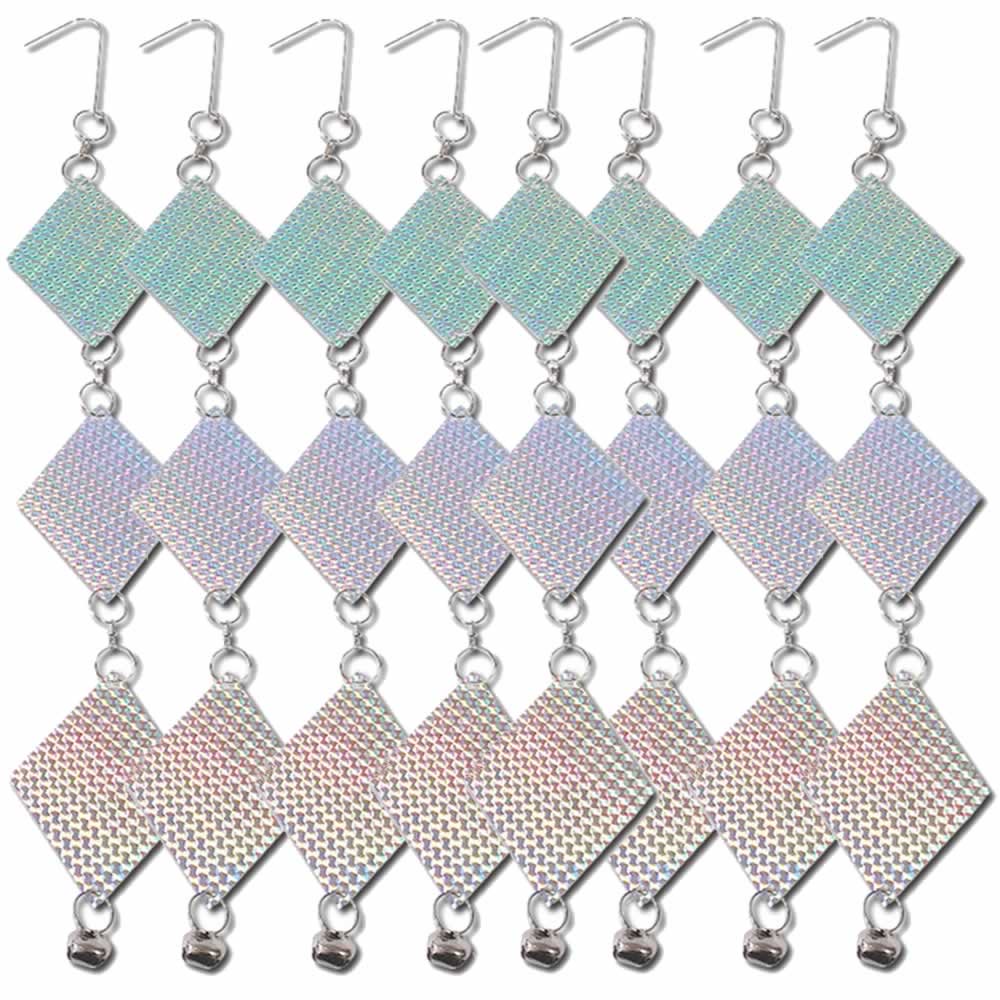
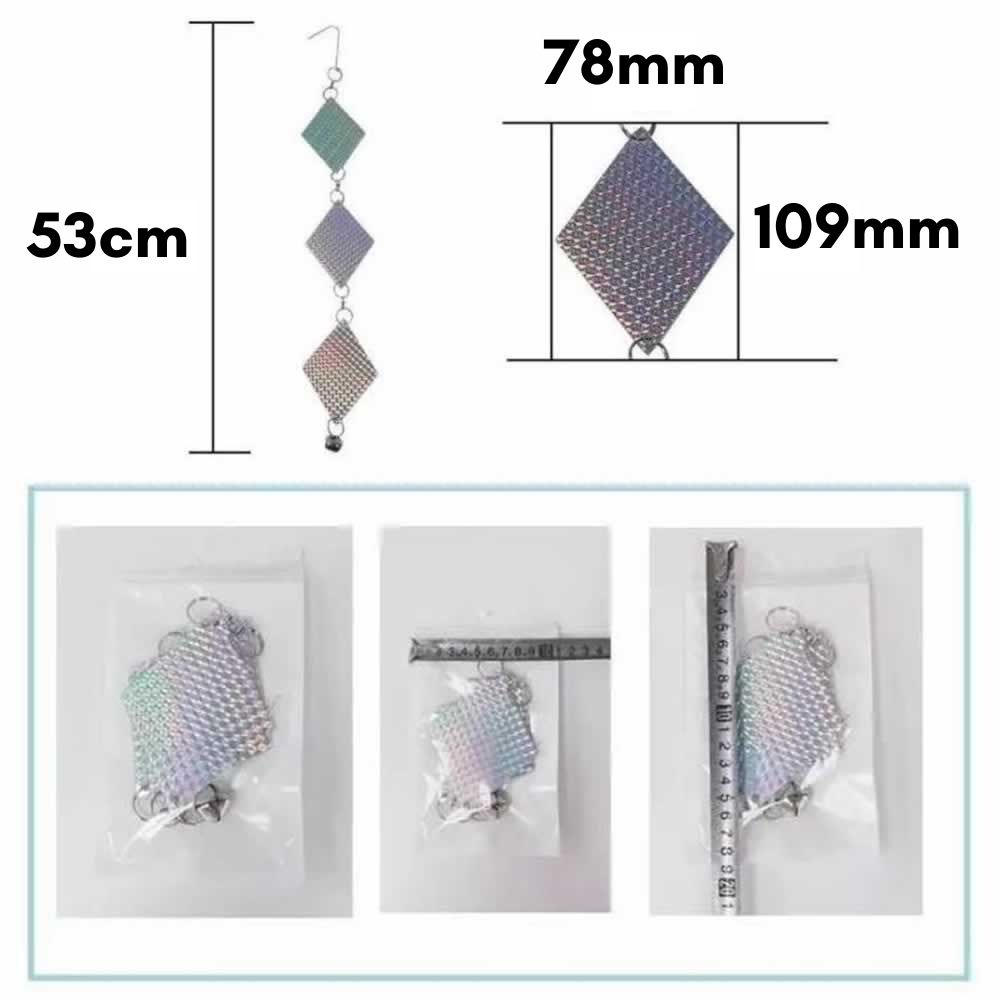
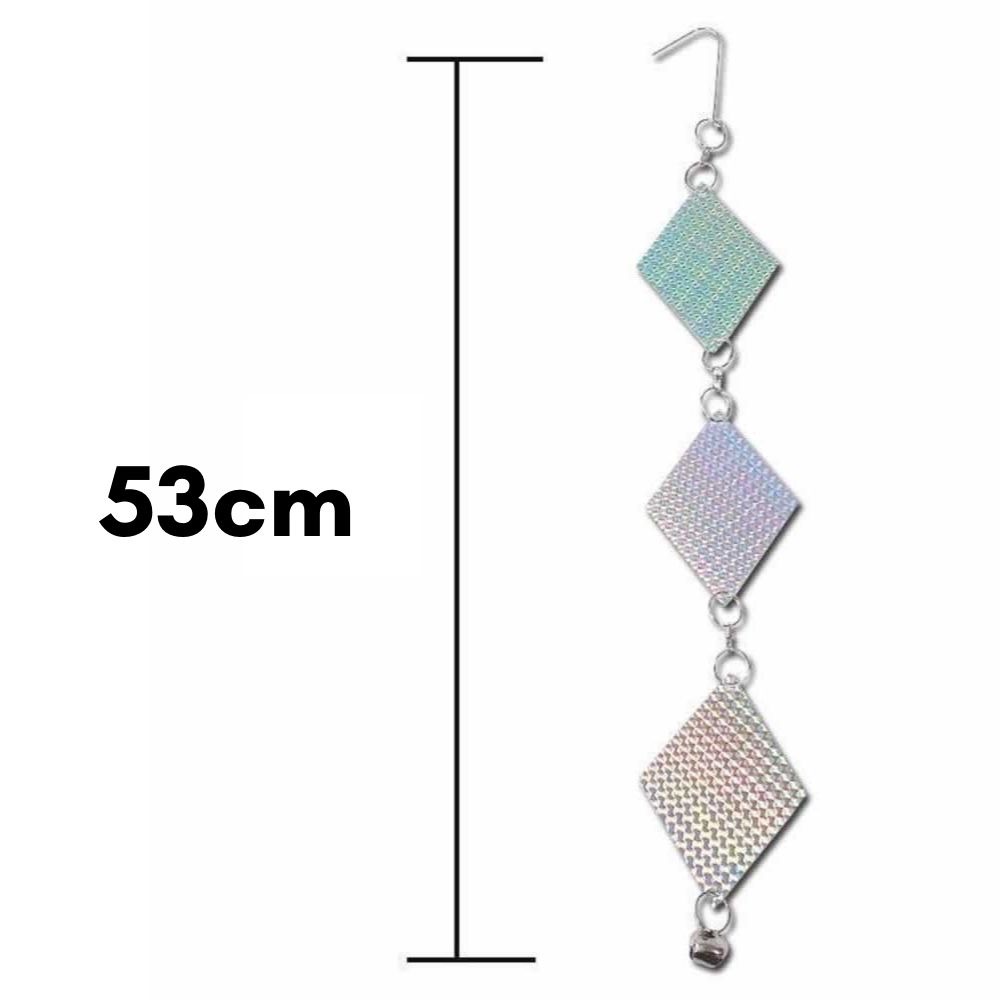
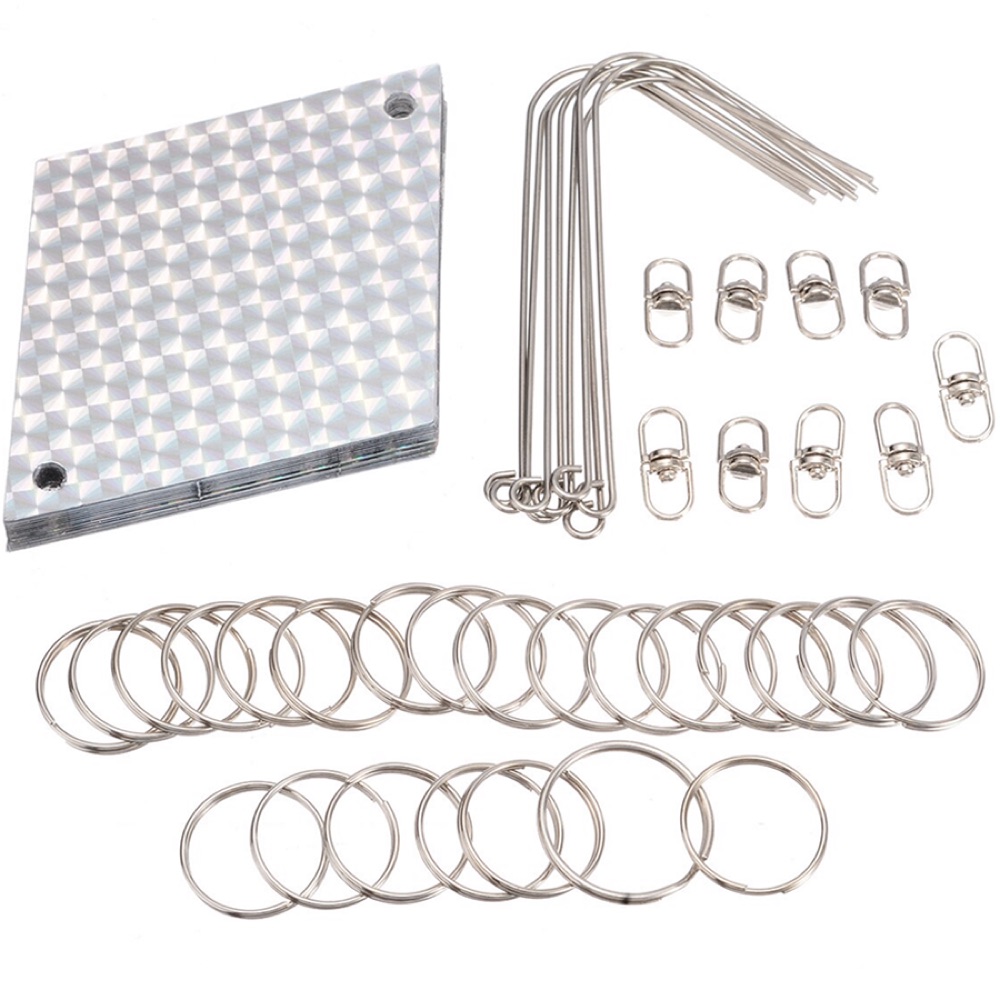
Each 53 cm hanging strand carries three double-sided mirrored discs with a hook, connecting rings and a small bell, sold per strand with no minimum order.

$15.40 $13.20
Save $2.20
Fast, FREE delivery across Australia on all orders $100 or more (save $15). Orders under $100 pay a flat $15 delivery.

These hanging discs scare pest birds by catching sunlight and throwing sharp flashes around as they spin in the breeze. Birds read the sudden light and movement as danger and steer clear.

Price MatchWe want to win your business
Fast RefundOn any undelivered items
Free ShippingMinimum spend required
Easy ReturnsHassle free returns & refunds
Buy direct online
Flashes in SunlightDouble-sided mirrored discs throw light as they spin
Humane and HarmlessStartles birds away without ever touching them
53 cm Hanging StrandThree mirrored discs, hook and bell per strand
Hang It in MinutesNo tools needed, just hook it where birds land

Bird Deterrent Reflective Discs

These hanging discs scare pest birds by catching sunlight and throwing sharp flashes around as they spin in the breeze. Birds read the sudden light and movement as danger and steer clear.

Each strand is 53 cm long and carries three diamond-shaped mirrored discs, a hanging hook, connecting rings and a small bell. Strands are sold individually with no minimum order.

Both faces of every disc are mirrored, so the flash works from every angle instead of only when the shiny side happens to face the sun.

Hang them over fruit trees, veggie patches, balconies, patios, carports, boats and anywhere else birds are making a mess.

The strand arrives flat-packed with instructions and smooth-edged parts, and you can arrange the pieces your own way. Quiet, simple and completely humane.

Specifications

Sold asPer 53 cm hanging strand, no minimum order
Discs per strand3 double-sided mirrored discs
Disc sizeAbout 8 cm x 11 cm each
Hanging length53 cm assembled
In the packDiscs, hanging hook, connecting rings and a small bell, with instructions
Reflective finishMirrored on both faces
Best forPigeons, sparrows, geese, woodpeckers and other pest birds
Where to hangGardens, fruit trees, balconies, patios, carports, boats, docks and pergolas
Weight0.28 kg

Frequently Asked Questions

How do bird deterrent discs work?

The discs are mirrored on both faces. When they spin in the breeze they throw sharp flashes of sunlight in every direction, and the constant light and movement reads as danger to a bird. Rather than stop and investigate, the bird moves on to a calmer spot.

Do bird scare discs really work?

Yes, with two honest conditions. They need wind and sunlight to do their job, and birds can get used to them if nothing ever changes. Hang them where they catch light and breeze, move them every week or two, and they stay convincing. For a stubborn roost, pair them with a physical barrier like spikes.

Which birds do they scare away?

They work on most pest birds that raid gardens and roost on structures, including pigeons, sparrows, geese and woodpeckers. Flocking birds that strip fruit trees are a classic target.

What comes in each pack?

One 53 cm hanging strand. That is three diamond-shaped discs mirrored on both sides, a hanging hook, connecting rings, a small bell for the base and instructions. The parts arrive flat-packed for you to clip together.

How do I put the strand together?

Clip the discs to the rings, add the hook at the top and the bell at the bottom, and you are done. Instructions are included and the edges are smooth, so it is a safe job for the kitchen table. It comes unassembled on purpose, so you can also make your own arrangement.

Where is the best place to hang them?

Anywhere the discs catch both breeze and sunlight, as close as you can get to where the birds actually land or feed. A branch, a pergola beam, an awning edge or a hook under the eaves all work. Still, shaded corners are the one place they underperform.

How many strands do I need?

As a starting point, one strand per small tree or balcony, and a strand every two to three metres along a fence line, gutter run or row of crops. Watch where the birds shift to and add or move strands until they give up.

Will they keep birds off my fruit trees?

Fruit trees are where these discs earn their keep. Hang one or two strands in the canopy before the fruit ripens, move them around the tree each week, and most raiding flocks lose their nerve. For prized crops, netting plus discs is the strongest combination.

Can I use them over a veggie patch?

Yes. Run a line or a few garden stakes along the patch and hang a strand every couple of metres. The flashes sweep across the beds as the discs spin, which is usually enough to keep seed thieves and seedling pullers away.

Do they work on boats and docks?

They are a favourite for boats, moorings and docks. Hang strands from rails, canopy frames or rigging so they swing over the areas birds foul. There is a reason you see shiny discs on boats in every marina.

Can I hang them near a pool?

Yes. Birds around a pool mean droppings in the water and on the paving. A few strands on the pool fence, a nearby branch or the pergola make the area feel unsafe to them without bothering swimmers.

Do they work on balconies and patios?

Very well, because balconies and patios usually get the light and airflow the discs need. Hang a strand at each end where pigeons land on the rail, and they stop treating your outdoor furniture as a perch.

Will the flashing annoy my neighbours?

It can if a disc is aimed straight at their windows, so place strands with that in mind. Hang them so the flash sweeps across your garden or up at the sky rather than into the house next door. A small shift in position is usually all it takes.

Do the discs make noise?

They are close to silent. The deterrent is visual, and the small bell at the base only gives a soft chime in a decent breeze. No speakers, no ultrasonic hum, nothing the household will notice.

Do they work at night?

Not really, and it is better you know that upfront. The discs need light to flash, so they do their work through the day, with some help from moonlight and garden lighting. Most garden raiding happens in daylight anyway. For birds roosting overnight, add a physical barrier.

Do birds get used to the discs?

Some can, if the discs hang in the same spot for weeks and nothing else changes. The fix is free. Move each strand a few metres every week or two, and the threat feels new again. Combining discs with spikes or netting also stops the smarter birds calling your bluff.

How long do they last outdoors?

The discs are made for outdoor use and handle sun, wind and rain. There is nothing to power and nothing to refill. Give the mirrored faces a wipe when they get dusty and a strand keeps flashing season after season.

Are the discs humane?

Completely. They scare, they never harm. No bird touches them, nothing traps or poisons, and the flock simply feeds somewhere else. That is why reflective deterrents are a standard tool around gardens, orchards and marinas.

Are they safe around children and pets?

Yes. Hang them above head height and they are out of reach entirely. The parts are smooth-edged, and there are no chemicals, snap mechanisms or loud noises. Cats and dogs generally ignore them after the first day.

Is it legal to use bird scare discs?

Yes. Visual deterrents are non-lethal and legal to use. Native birds are protected by law, so the rules are simple. Scare, never harm, and leave an active nest with eggs or chicks alone until the young have flown. Deterring birds from an empty spot is always fine.

What about birds nesting under my eaves?

Discs are a good fit there. One of our customers hung these under the eaves and fitted discs near the soffit vents where birds kept trying to build, and the nesting stopped. Act before nesting season, because once eggs are laid you need to wait until the nest empties.

Should I combine the discs with spikes or netting?

For a bird that flies past your garden, discs alone usually do it. For a flock that has roosted on your building for years, use layers. Discs unsettle the birds while spikes or netting remove the landing spot, and together they beat a habit that either one alone might not.

How big is each disc?

Each diamond-shaped disc measures about 8 cm across and 11 cm top to bottom, and the assembled strand hangs 53 cm from hook to bell.

Is there a minimum order?

No. Strands are sold individually, so you can order one for a balcony or a dozen for an orchard row and pay for exactly what you need.

Can I hang them in a carport?

Yes, carports and open sheds work well because birds perch on the beams and foul whatever is parked below. Hang strands near the entry edges where light comes in so the discs still catch some sun and breeze.

How much is delivery and how long does it take?

Delivery is free on orders over $100, with a flat $15 charge under that. Most metro orders arrive within 2 to 5 working days, regional addresses can take a little longer, and you get a tracking link by email as soon as your order ships.

What payment methods can I use?

You can pay by card through Stripe or with PayPal. Both are processed securely and we never see or store your card details.

What if my order arrives damaged?

Your purchase is covered by the Australian Consumer Law. If anything arrives faulty or damaged, contact us with your order number and a photo, and we will arrange a replacement or refund.

Can I return them if I change my mind?

Yes, within 14 days of delivery. Keep the strands unused and in resaleable condition with their packaging, and see our Refunds and Returns page for the simple steps.

Can you help me choose the right bird deterrent?

Happily. Send us a photo of the problem area and a note on which birds are visiting through the contact page, and we will tell you straight whether discs, spikes, netting or a mix will fix it.

How to Use Bird Scare Discs to Protect Your Garden: The Complete Guide

7 min read Bird Spikes Australia

Something has been at the strawberries again. There are droppings down the boat cover, the balcony rail is a mess, and the same flock lands in the fruit tree every single morning. If that sounds familiar, a few hanging reflective discs are the cheapest way to argue back. This guide covers how bird scare discs work, where they do their best work, how many you need, and, just as important, what they cannot do on their own.

How Reflective Bird Discs Work

Birds stay alive by treating anything strange as a threat. These discs use that instinct against them. Each strand carries three diamond-shaped discs, mirrored on both faces, hanging from a hook on a 53 cm chain of rings with a small bell at the base. When the strand catches a breeze, the discs spin and throw hard flashes of sunlight in every direction. To a bird gliding in for a feed, the sudden bursts of light and constant movement read as danger. It does not stop to work out what the shiny thing actually is. It just picks a quieter garden.

The double-sided mirror finish is not a small detail. Discs with one dull back spend half of every spin doing nothing, which is why cheap single-sided versions disappoint people. Because both faces flash here, the strand works no matter which way the wind has twisted it, and it never hangs "backwards".

There is nothing to plug in, charge or refill. Sun and wind run the whole show.

Do Bird Scare Discs Really Work? The Honest Answer

Yes, with two conditions, and you deserve the honest version before you spend a cent.

Condition one is placement. Reflective discs need light and movement to be scary. A strand hanging in a dark, still corner is just a decoration. Hang them where they catch breeze and sunlight for a good part of the day and they will earn their keep.

Condition two is change. Birds are wary, not stupid. If a disc hangs in exactly the same spot for a month and nothing bad ever happens, some birds will quietly decide it is furniture. The fix costs nothing. Move each strand a few metres every week or two, swap two strands between trees, or change the height. Any small change resets the threat and keeps the flock guessing.

Understand those two things and discs are the best reflective bird deterrent for the money. They are the budget-friendly first step for gardens, fruit trees, balconies, boats and patios, and often the only step you need. What they are not is a brick wall. A flock that has roosted on the same ledge for three years has a habit that light alone may not break. For those stubborn jobs, treat discs as one layer and pair them with a physical barrier like bird spikes or netting. The discs unsettle the birds, the barrier removes the landing spot, and together they win arguments that either would lose alone.

Which Birds Do They Move On?

Reflective discs work on most of the usual suspects, including pigeons, sparrows, geese and woodpeckers. Small flocking birds that strip fruit and pull seedlings are the classic target, and they are also the birds that spikes cannot stop, since they land between spikes or straight on the crop. That is exactly where a visual deterrent fits.

Geese grazing a lawn near water, pigeons loitering on a carport beam, sparrows working over a veggie patch: all respond to flashing light. Very bold individual birds that have learned your garden is safe may need the moving-and-layering tactics above, so start with discs and escalate only if a particular bird calls your bluff.

Where to Hang Them

Placement is most of the game, so walk the garden before you hang anything. You are looking for two things: where the birds actually land or feed, and where a strand will catch wind and sun.

Hang strands as close to the trouble spot as you can. A branch over the raided beds, the pergola beam above the outdoor table, an awning edge, a hook under the eaves, a garden stake with a crossarm over the lettuce. Height-wise, roughly eye level with the birds beats way up high, because the flash needs to cross their line of flight.

Think about flash direction too. The light sweeps wherever the disc faces as it spins, so if a neighbour's window sits in the firing line, shift the strand or drop it lower so the flashes sweep across your garden rather than into their lounge room. A metre of adjustment usually settles it, and it is a friendlier way to run the best bird discs for garden duty without a fence-line dispute.

How Many Strands Do You Need?

There is no minimum order, so match the count to the problem rather than buying a bulk pack of guesses.

As a rule of thumb, use one strand per small tree or balcony and a strand every two to three metres along a longer run, like a fence line, a gutter edge or a row of crops. A single 53 cm strand protects a surprising bubble of space because the flash travels, but gaps are where birds sneak in, the same way they find the one unspiked ledge on a building.

Then watch. Birds will tell you within a few days where the coverage is thin, because that is where they land. Add a strand there or shift one across. Treat the first week as a conversation you intend to win.

Fruit Trees and Veggie Patches

Protecting a crop is the single most common job for these discs, and timing matters more than quantity. Hang one or two strands in the canopy two or three weeks before the fruit ripens, not after the flock has already found it. Birds scout early, and a tree that feels dangerous before the fruit sweetens never makes it onto their route.

Move the strands around the tree each week as the season runs, since the whole point is that the threat never sits still. For a veggie patch, run a line or stakes along the beds and hang a strand every couple of metres above the crop. Growers looking for the best bird deterrent for fruit trees on a budget should start exactly here, and for a prize crop, add netting underneath the flash for a belt-and-braces finish. Discs are also the easy answer for anyone hunting discs to stop birds eating fruit without spraying anything near food.

Boats, Pools, Patios and Balconies

Walk any marina and count the shiny discs. Boat owners settled this debate years ago, because droppings ruin covers, decks and fittings, and a boat is no place for wiring or noise machines. Hang strands from rails, rigging or the canopy frame so the discs swing over the areas birds foul, and they make the whole vessel feel like a bad idea. The same logic covers docks and moorings, which is why these are often called the best bird deterrent discs for boats in the range.

Around pools, a few strands on the fence, a nearby branch or the pergola keep droppings out of the water without bothering swimmers. On balconies and patios, hang a strand at each end of the rail where pigeons like to land. Balconies get good light and steady airflow, which makes them close to ideal disc territory, and a hanging strand needs no drilling, which renters appreciate.

Putting a Strand Together

The strand arrives flat-packed and unassembled, with instructions in the bag. Clip each disc to the connecting rings, add the hook at the top and the small bell at the base, and you are hanging it inside five minutes. The edges are smooth, so it is a safe job to do at the kitchen table with kids watching.

Unassembled is a feature, not a shortcut. Because nothing is fixed, you can run the classic three-disc strand, split discs across two short drops, or clip a single disc where space is tight. Make the shape that suits your spot.

Keeping It Humane and Legal

Everything about this product deters by nerves, not contact. No bird ever touches a disc, nothing traps, nothing poisons, and the worst thing that happens to a pigeon is a fright and a short flight. That makes discs one of the most humane bird deterrents you can buy, and a safe choice around children, pets and food gardens.

Native birds are protected by law, so keep two rules in mind. Never harm a bird, which discs make easy, and never disturb an active nest with eggs or chicks. If birds have already nested, wait until the young have flown, then clean up and hang your discs so the next generation books elsewhere. Deterring birds from an empty branch or ledge is always fine, and earlier is easier.

Aftercare

Maintenance is a two-minute job. Dust and salt spray dull the mirror finish over time, so wipe the faces with a soft damp cloth when they stop looking sharp. Check the rings when you move a strand, and bring discs in ahead of a serious storm if you can, the same way you would a wind chime. That is the whole list.

The Bottom Line

Hang the strands where birds actually land, give them sun and breeze to work with, move them every week or two, and add a physical barrier if a long-standing roost digs in. Do that and a handful of shiny discs to scare birds will quietly solve most garden, balcony and boat problems for $13.20 a strand. The strawberries stay yours, the boat cover stays clean, and the flock finds a garden that did not read this guide.

Browse all bird control

Page summary

Bird Deterrent Reflective Discs from Bird Spikes Australia: humane hanging bird scare discs sold per 53 cm strand with no minimum order. Each strand has three double-sided mirrored discs about 8 x 11 cm, a hanging hook, connecting rings and a small bell, and arrives flat-packed with instructions. The discs spin in the breeze and flash sunlight to scare pigeons, sparrows, geese, woodpeckers and other pest birds away from gardens, fruit trees, veggie patches, balconies, patios, carports, boats and docks. Works best hung where it catches wind and sun, moved every week or two, and combined with physical barriers for stubborn roosts.