

The complete guide
How to Keep Possums Off Your Fence, Roof and Garden: The Complete Guide
You hear it before you see it. A four-beat gallop across the roof after dark, a fence that shakes under something heavier than a cat, tomatoes that vanish the night before you planned to pick them. Possums are creatures of habit. Once one adds your fence to its nightly circuit, it runs the same route at the same time until something about that route changes. This guide covers how to change it with possum spikes, legally, humanely and without turning your garden into a construction site.
The Law Comes First: Possums Are Protected
Everything about possum control in Australia starts from one fact. Possums are protected native wildlife in every state and territory. It is illegal to harm or poison them. It is illegal to trap them without a licence. It is also illegal to relocate one yourself, and for good reason, because a possum dropped in unfamiliar bushland usually does not survive the week.
None of that is bad news, because it points straight at the right tool. You do not need to hurt or catch a possum. You only need to make its favourite path uncomfortable enough that it picks a different one. That is the entire job of a blunt spike strip. The possum arrives, finds the footing awkward, turns around and heads back the way it came. Nothing is trapped and nothing is injured. The best humane possum deterrent is the one that never touches the animal at all, and that is exactly what these strips are.
Why Your Fence Is a Possum Highway
Watch a possum for one evening and you will see why fences matter so much. Down at ground level there are dogs, cats and cars. Up on the fence line there is a dry, flat, elevated road that connects every tree, shed and roof in the street. Possums use fence tops the way we use footpaths.
The route is rarely random. A possum leaves its den around dusk, follows the same fence runs to the same food, and heads home before dawn. Look for the evidence and you can map the whole commute. Droppings along the capping, scratch marks at the climb points, a worn patch where it jumps to the pergola. That map tells you where the spikes go, and it is usually a far shorter list than your whole boundary.
What Spikes Do, and What They Do Not
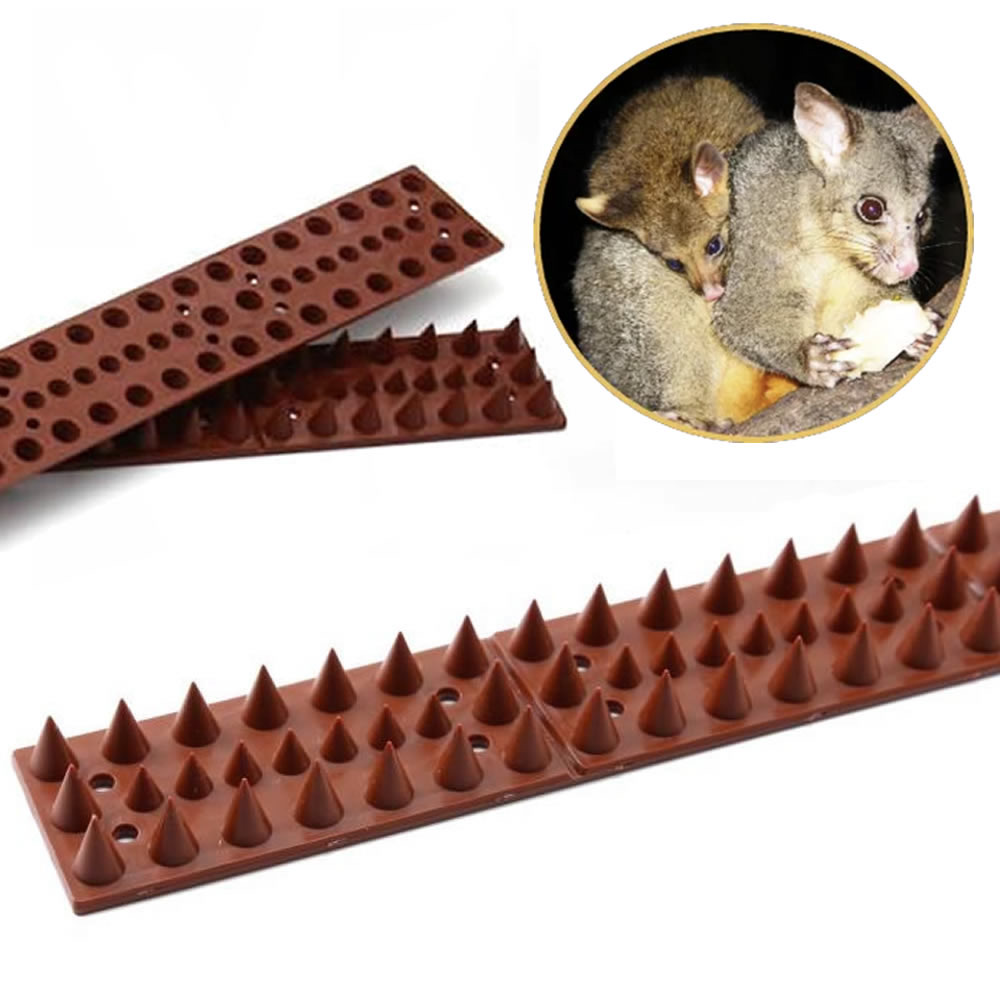
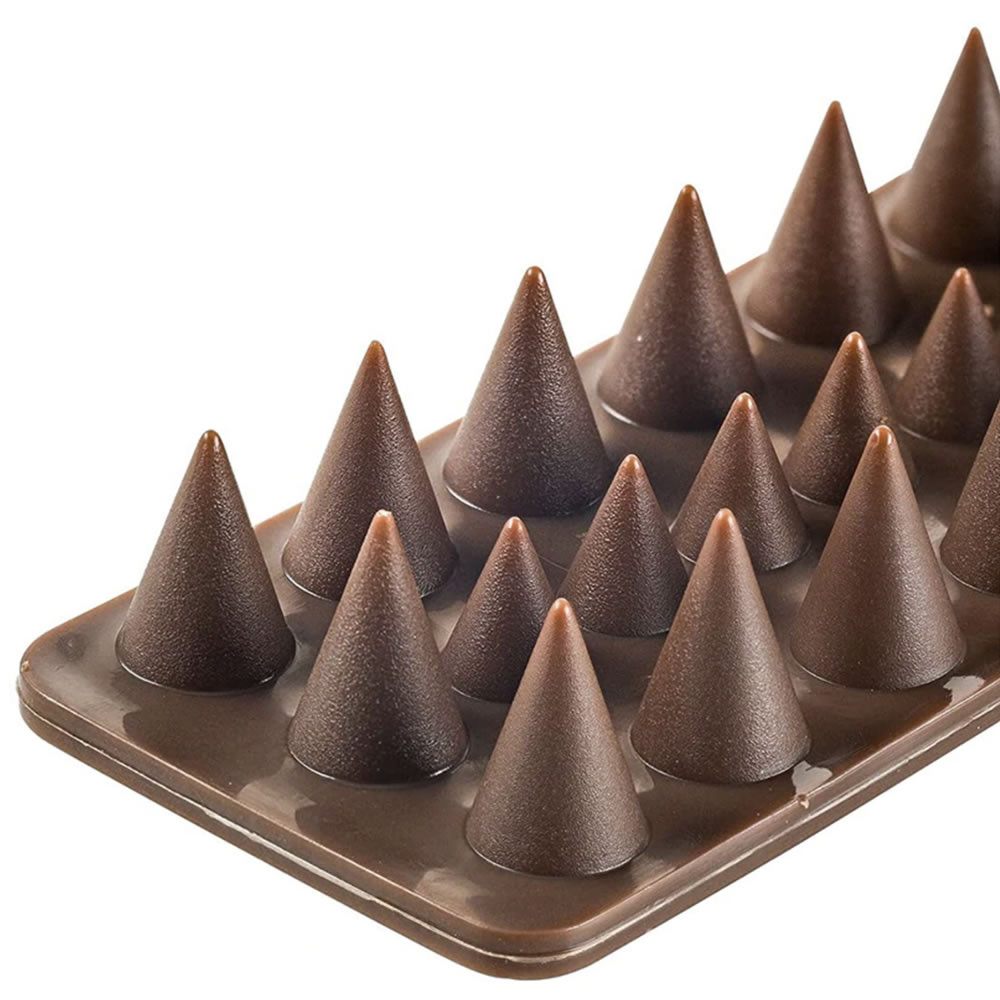
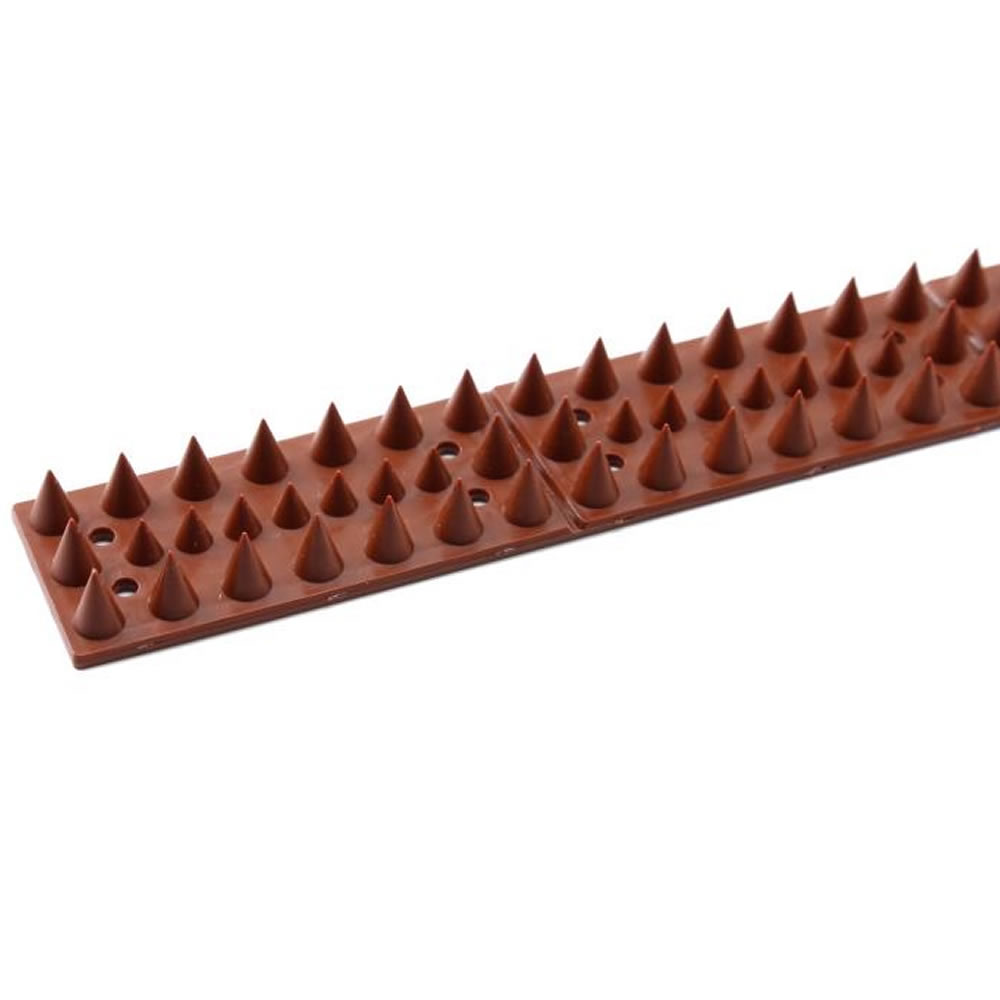
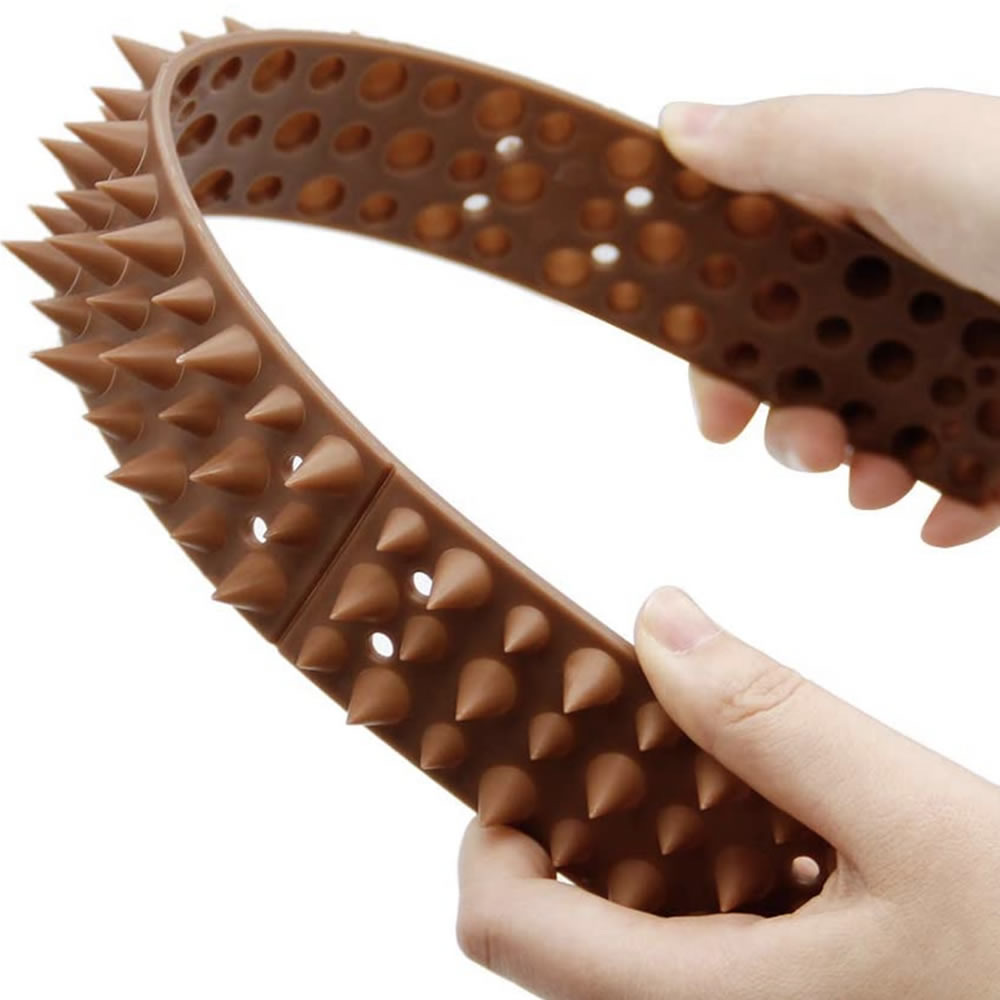
A possum spike strip is a row of blunt plastic points on a flat base. It does not stab, snag or spring. It simply removes the comfortable footing a possum needs to walk a narrow surface, the same way gravel ruins a barefoot shortcut. Faced with awkward footing and a long balancing act, the possum takes the detour.
A dose of honesty belongs here too. No deterrent turns away every possum every single time. Possums are clever, agile and stubborn about routes that lead to food. What the strips do is make your fence the hardest option on the street. Treat the real routes and the launch points, and the fence stops earning its place on the nightly circuit.
Measuring Up
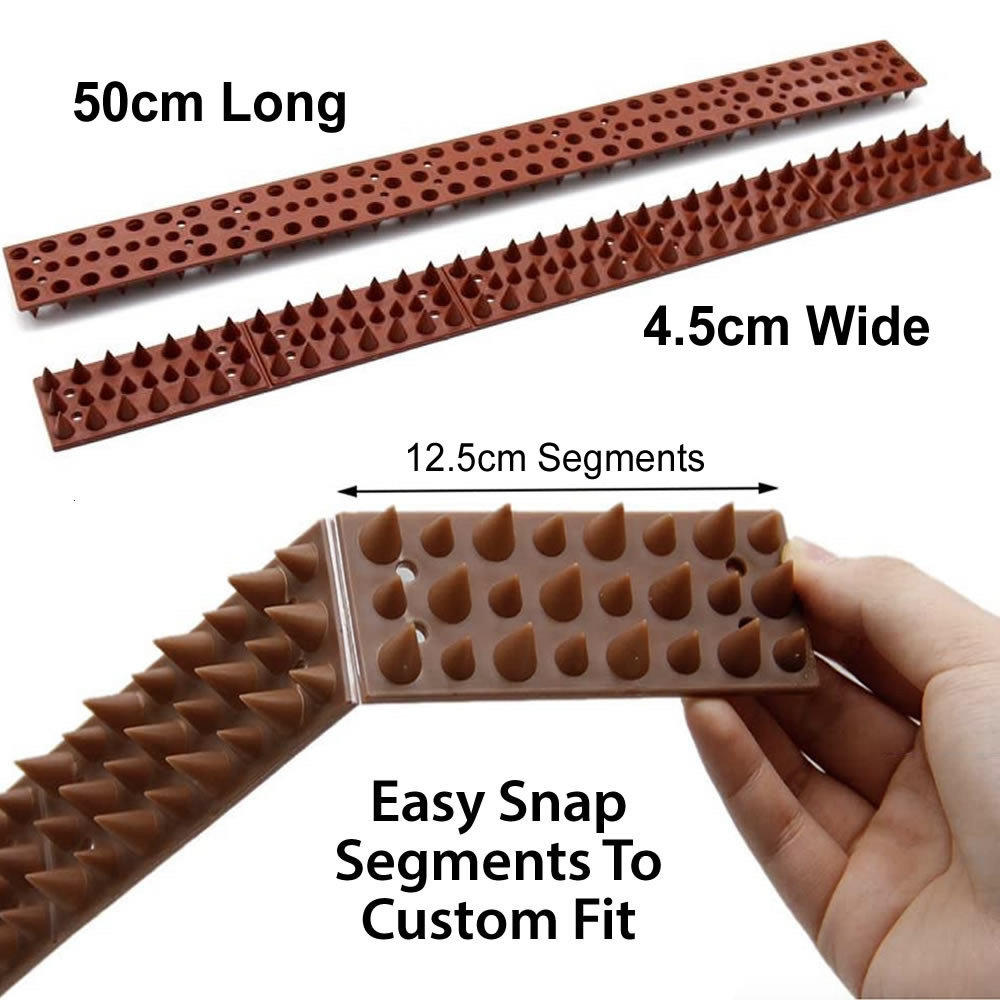
Each strip is 50 cm long and every metre contains two strips. Measure the runs you want to treat, add roughly ten percent for cuts and corners, then choose the pack that covers them.
For possums you rarely need to spike an entire boundary. Concentrate on the sections that carry traffic. The fence runs closest to the house, the corner post it climbs, the panel under an overhanging branch, the rail beside the fruit trees. A handful of well-placed strips on the right panels beats a hundred spread thin.
Keeping Possums Off the Roof
Roof noise is the complaint that brings most people to this page, and the fix starts well away from the roof itself. A possum gets onto a roof by climbing something and jumping. The usual launch points are a fence run beside the house, a pergola or carport frame, a trellis, and branches that overhang the gutter line.
So work through the approach route instead of the destination. Trim branches back a couple of metres from the roofline first, because even the best possum spikes for fences cannot stop an animal that drops in from a gum tree. Then run strips along the fence sections nearest the house, across the pergola beams and along the top of any trellis within jumping range. You are not fencing the possum out of the yard. You are cutting the ramp to the roof.
Already Got a Possum in the Roof Void?
This is the one job where spikes alone are the wrong first move, and getting the order wrong can be fatal for the animal. Never seal an entry point, and never spike the last access route, while a possum is still inside the roof. A possum shut in a roof void will die there, which is both illegal and a smell you will not forget.
The right order is simple. A licensed possum removalist gets the animal out, since trapping inside a building is legal for them in ways it is not for you. The entry point gets sealed once the possum is confirmed gone. Then the spikes go onto the fence tops, beams and launch points so the next possum in the street finds the climb no longer worth the effort. Spikes are the prevention layer, not the eviction tool.
Fruit Trees, Veggie Beds and Roses
Garden raids run along the fence too. A possum works its way along the capping, then leans or drops into whatever is in reach. Rose buds, herb pots, raised veggie beds, the fruit trees planted along the fence line. The plants take the damage, but the fence carries the traffic.
That is why spiking the approach usually beats netting every single plant. Run strips along the fence sections beside the garden beds and behind the fruit trees, and trim any branch that bridges from tree to fence. A possum that has to cross open lawn to reach the silverbeet is exposed to every dog in the neighbourhood, and it knows it. One treated fence run protects everything planted along it, which is why fence strips make such a practical possum deterrent for garden beds and borders.
Pergolas, Deck Rails and Other Walkways
Anything flat, narrow and elevated can join the highway. Pergola beams, deck and balcony rails, gate tops, shed roofs and brick wall capping all carry possum traffic, and the same strips suit all of them. Screw the base to timber beams. Cable-tie it around round rails. Glue it along masonry. If a surface shows droppings or scratch marks, it is part of the route and worth treating.
Installing Step by Step
Start with a clean surface, because dirt and old droppings weaken adhesive and mark the possum's territory. Scrub, rinse and let it dry. Wear gloves for this part.
Next, pick the fixing to match the surface. Screws hold best on timber fence capping and pergola beams. A bead of outdoor adhesive suits brick, render, stone and metal. Cable ties wrap neatly around railings and trellis tops, and they are the go-to for renters since they come off without leaving a mark.
Then run the strips with no gaps. A possum is very good at finding the one bare stretch you left near its launch point, so butt the strips hard against each other and cut the final piece to fit with snips. Pay special attention to the exact spot it jumps from, which the scratch marks will show you.
Cats and Birds Get the Same Message
One of the quiet bonuses of possum proofing a fence is everything else it tidies up. Cats dislike walking on spikes just as much as possums do, so the neighbour's tomcat loses its favourite lookout at the same time. Pigeons and doves lose the perch too, since these are the same hard plastic strips we sell for bird control. If cats are your main visitor, the cat spikes page goes deeper on that job, and for bird problems away from the fence line, the bird spike range covers ledges and rooflines.
Play Fair With the Possum
A possum you push off the fence still needs somewhere to sleep and a way to reach food, and a possum with options is far less determined about yours. Leave the trees at the back of the yard alone, spike only the runs that lead to the house and garden beds, and consider a possum nest box in a tree well away from the roof. It costs little, it gives the animal a legal, safe home, and it takes the pressure off your spikes. The goal was never to banish possums from the street. It is to move them along a path you can both live with.
Aftercare
Once the strips are up, the job is mostly done. Brush off leaves, twigs and cobwebs every few months so the points stay clear, and wash with mild soapy water if they get grimy. The polypropylene is UV-stable, so there is no yearly replacement round. If you want the strips to vanish against a dark fence, paint them with outdoor paint before you fit them.
The Bottom Line
Map the route, spike the busy runs and the launch points, trim the overhanging branches, and leave the possum a decent alternative. Packs start at $13.20 per metre, with better value at 10, 20 and 30 metres, and nobody gets hurt along the way.