

The complete guide
How to Choose and Use a Sonic Bird Repellent: The Honest Guide
Pigeons on the warehouse roof, starlings in the orchard, gulls on the boat. When the problem area is too big or too open for spike strips, a sonic bird repellent is the tool people reach for. This guide explains how the technology works, what it genuinely can and cannot do, and how to set this unit up so you get real results instead of an expensive garden ornament.
The Honest Bit First
Most pages selling a bird scarer sound device promise the earth. We would rather tell you the truth, because it is the difference between a happy customer and a return.
Sonic deterrents give variable results. That is not a flaw in this particular unit, it is the nature of sound-based bird control everywhere. Three things decide your outcome. The species you are dealing with, since some birds spook easily and others are bold. The site itself, because open ground carries sound while walls and trees swallow it. And how established the birds are, because a flock that has roosted on your building for two years treats it as home and will tolerate far more pressure than a scouting party that arrived last Tuesday.
So here is the honest rule. Sound works best as one part of a combined approach. Use it to make an area feel dangerous, and use physical barriers like spikes, mesh or netting to make the favourite perches unusable. On a fresh, light problem in an open area, this unit alone often does the job. On an entrenched roost, plan on the combination from day one.
What This Unit Actually Is
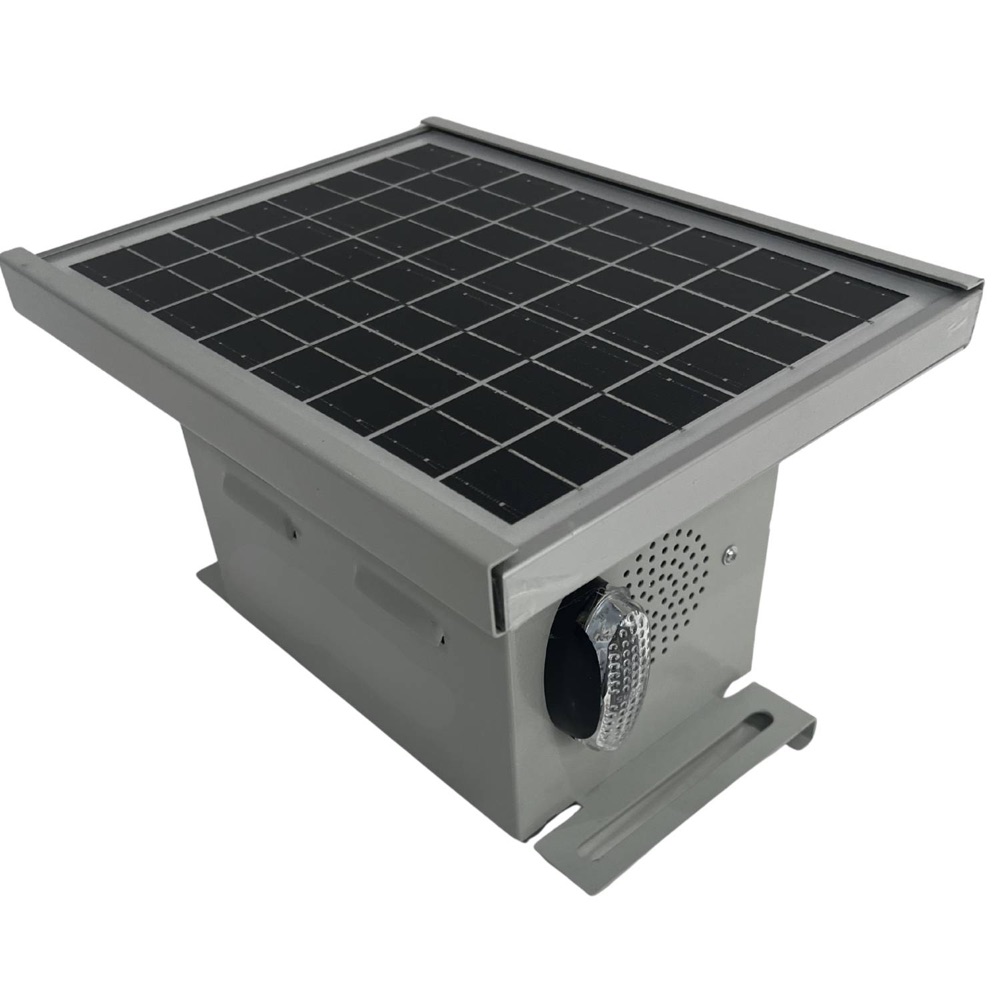
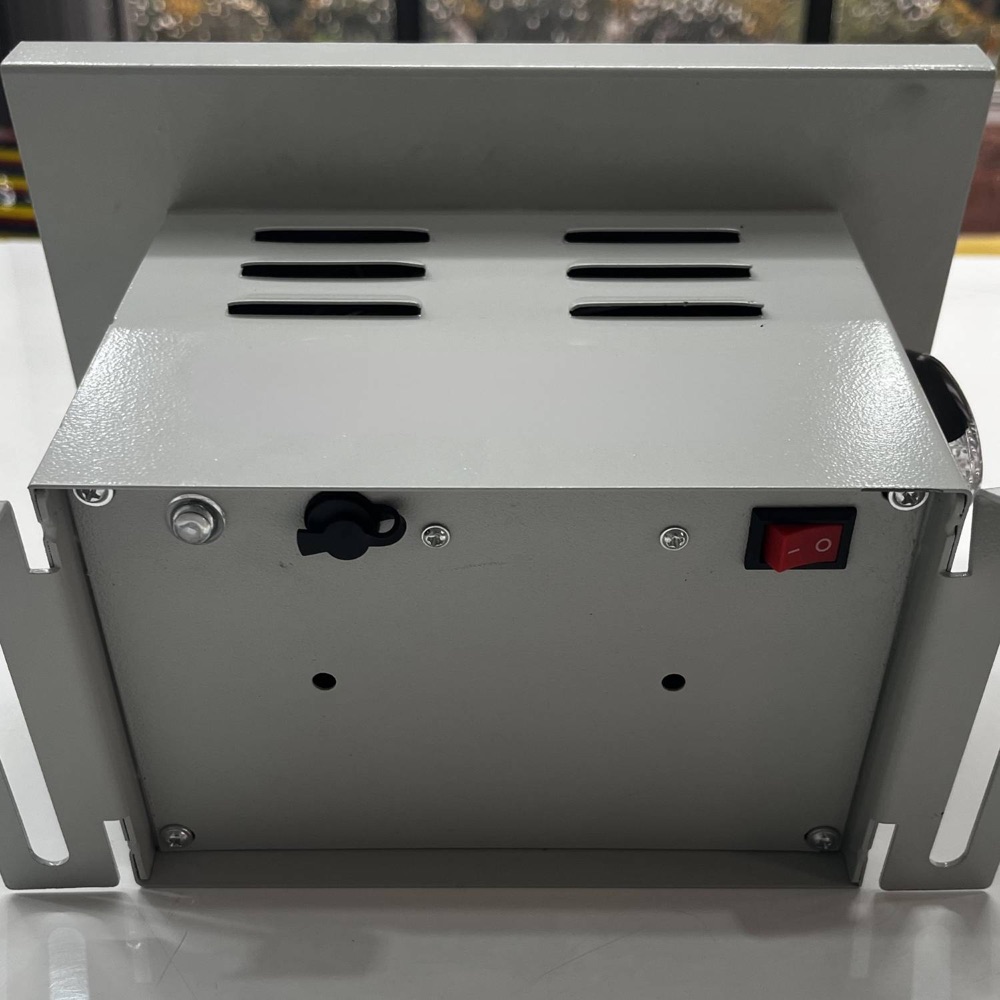
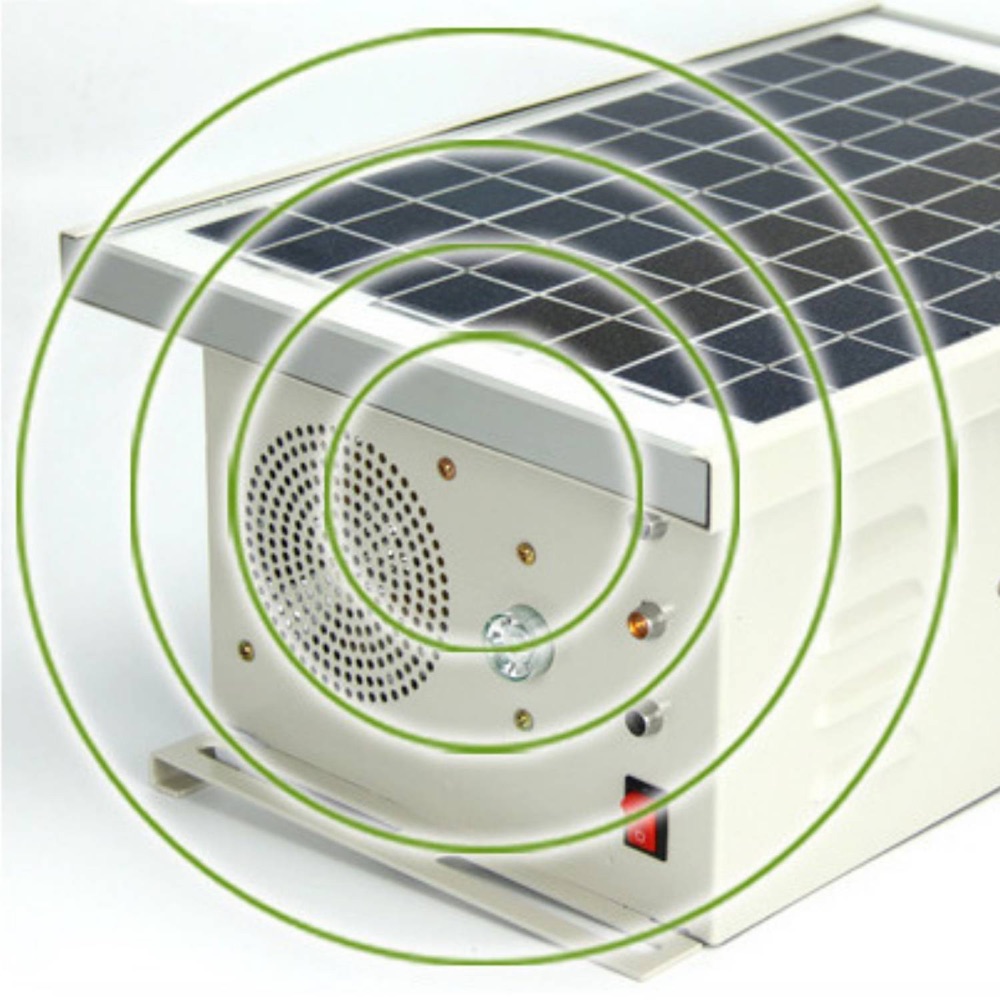
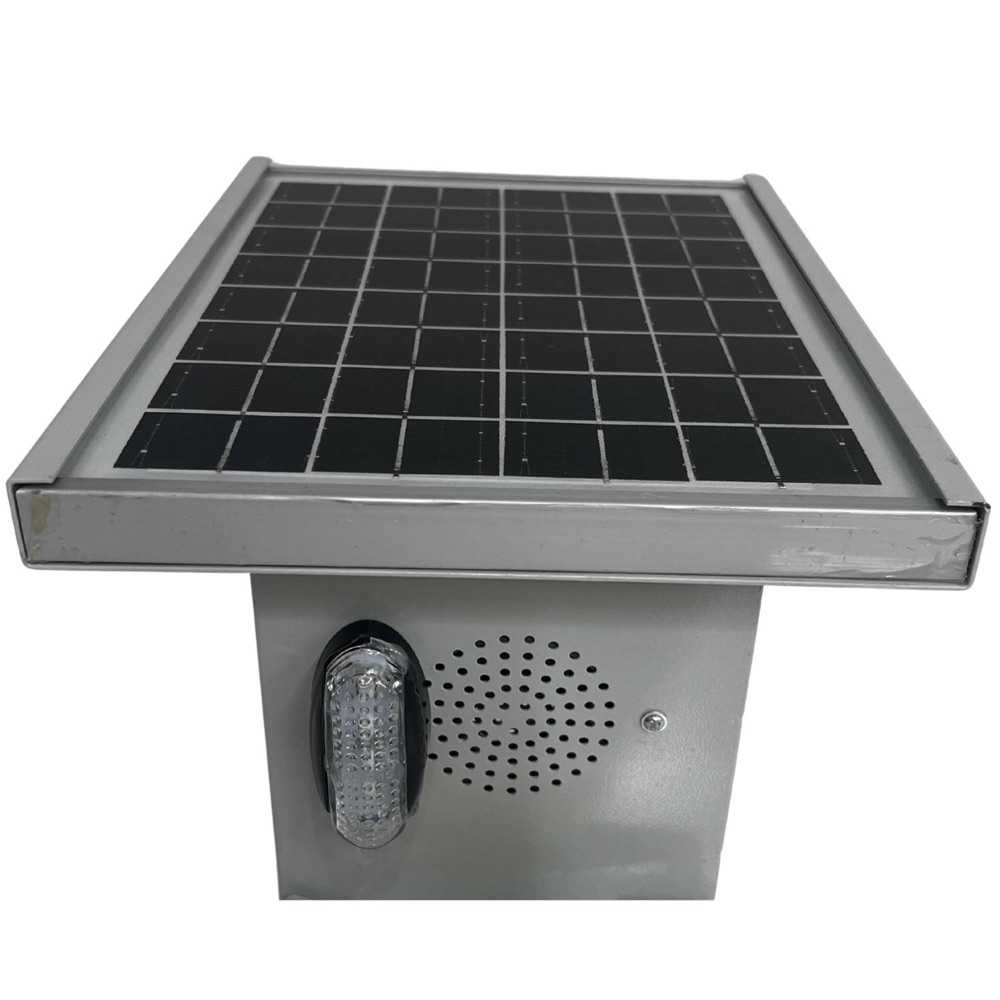
This is a solar powered, fully self-contained bird deterrent that runs three defences from one box.
First, the audible layer. Two 20 watt speakers rotate through more than 30 recorded sounds, including eagle and raptor calls, animal cries, gongs, drums and firecracker bangs. Birds hear a predator or a sudden threat and their instinct says leave. Because the library is large and the unit keeps shuffling it, there is no single sound for the flock to learn and dismiss, which is what lets a good predator call bird deterrent keep working after week one.
Second, the ultrasonic layer. Four emitters sweep frequencies between 16 and 30 kHz, mostly above human hearing but well within a bird's range. The sweep pattern keeps shifting rather than holding one tone, and that variability is what separates the best ultrasonic bird repeller designs from cheap units that birds tune out within days.
Third, the visual layer. High brightness red and blue LEDs flash while the unit runs, through fish eye lenses that throw the light wide. Birds are sensitive to those colours, and the flashing adds a second sense to the message the sound is already sending.
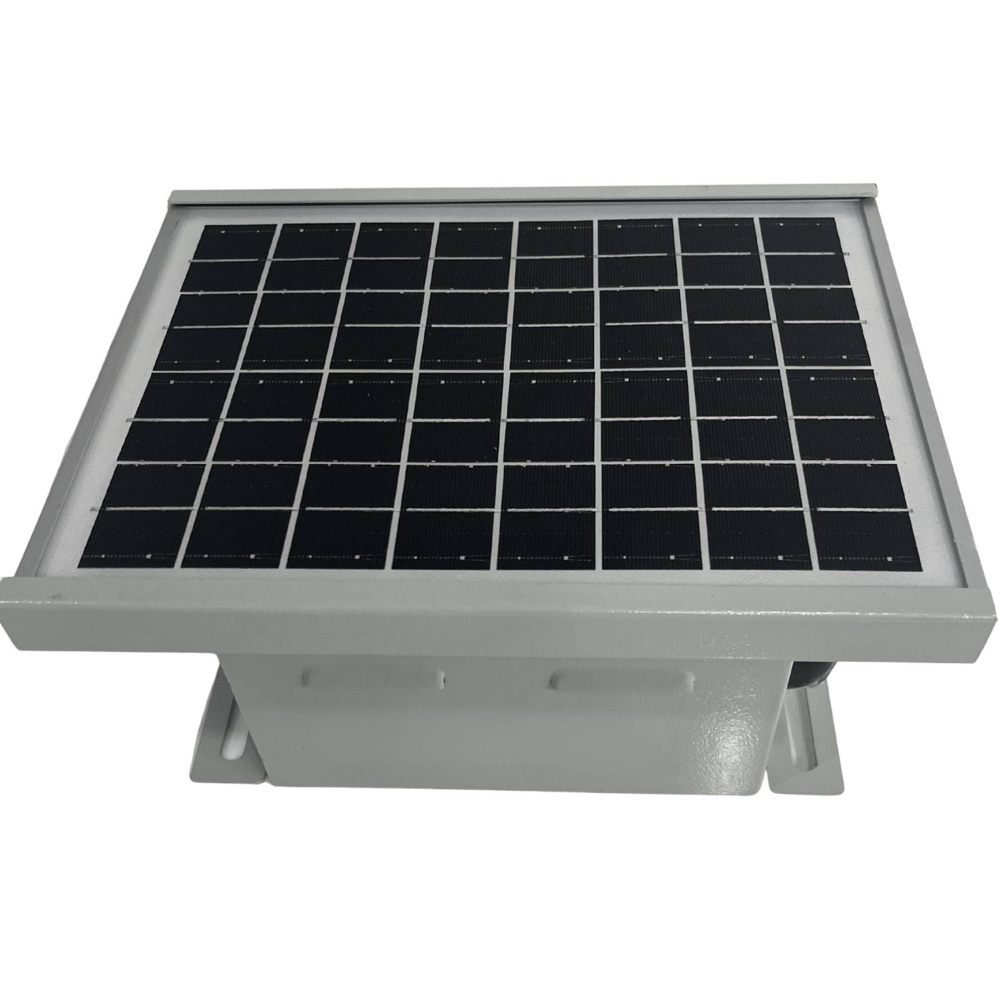
The unit runs an automatic cycle through daylight hours. Three minutes of ultrasonic sweeps, three minutes of audible sounds, then seven minutes of rest, repeating all day. A light sensor rests it after dark and wakes it at dawn, which saves the battery and keeps the neighbourhood quiet overnight. Power comes from the built-in solar panel charging a 12V 5Ah rechargeable battery, so there is no cable to run and no power bill attached. Coverage is around 90 square metres of open space per unit.
Which Birds Does It Move?
Pigeons lead the list, which is why so many people search for the best pigeon deterrent sound they can find. Starlings, crows, mynas, gulls and most other daytime pest birds also respond to predator calls and shifting ultrasonics. The response is never uniform, though. Individual flocks have personalities, and a bird with a nest nearby has a strong reason to hold its ground. Expect fast results on birds that are still deciding whether your place is worth settling, and a longer campaign against birds that already call it home.
Where This Unit Belongs
Sound needs room to travel, so this style of unit earns its keep in big, open spaces. That is exactly where spikes and netting struggle, which is why the two approaches partner so well.
Orchards and market gardens are classic territory, and growers hunting for the best bird scarer for orchards usually want exactly this hands-free, solar setup, protecting fruit through the season with no daily effort. Warehouses, grain sheds and factory roofs suit it too. Our featured customer review comes from a warehouse owner who had tried nets, spikes and scarecrows before a sound unit finally shifted his pigeons. For anyone comparing the best bird deterrent for warehouses, the lesson from that story is that big flat roofs are sound country, not spike country.
It also suits yards and paddocks, fish ponds where herons and gulls raid stock, jetties, and moored boats. A boat owner looking for the best bird scarer for boats gets a bonus from the solar panel, since there is no shore power to worry about. Substations, towers and remote infrastructure round out the list, and the original maker built this unit with exactly those sites in mind.
Where does it not belong? Small courtyards and balconies boxed in by walls. Sound bounces and annoys the humans more than the birds in tight spaces, and a physical barrier is the smarter buy there. We would rather point you at spike strips for that job than sell you the wrong tool.
Setting It Up for Real Results
Placement decides most of the outcome, so take ten minutes to get it right.
Put the unit in full sun. The solar panel is the fuel tank, and a shaded panel means a flat battery and a quiet unit. Face it toward the spot where the birds actually land or feed, with a clear line between the unit and that spot. Raise it up on a post, pallet stack or roof edge if you can, because height helps sound carry and matches where birds spend their time.
Then, and this is the step most people skip, move it. Every two or three weeks, shift the unit a few metres or turn it to face a different angle. Birds can habituate to anything that stays the same, and a sound source that keeps relocating reads as a live threat rather than a fixture. The unit already varies its own sounds and frequencies, so your occasional repositioning stacks on top of that built-in unpredictability.
For areas bigger than about 90 square metres, add units with overlapping coverage rather than expecting one box to police a whole orchard. Start with one on the worst hotspot, learn how your birds respond, then scale.
Pairing Sound with Physical Barriers
Think of bird control as pressure plus denial. The sound unit applies pressure, making the whole area feel risky. Barriers apply denial, making the specific perches impossible to use. Either one alone can win an easy fight. Together they win hard ones.
If pigeons roost on your ledges and beams, run spike strips along those edges while the sound unit patrols the open ground. If birds nest inside a shed, close off the entry points with mesh while the unit makes the surrounds uncomfortable. This combination approach is standard practice in commercial bird control, and it is the fastest route we know to a bird-free site that stays that way. It is also why we would never call any electronic bird deterrent a total fix on its own, no matter how good the spec sheet looks.
Neighbours, Pets and the Law
The audible sounds are real sounds, rated to 120 decibels at the unit. Out in a paddock that matters to nobody. In a suburb, point the unit away from neighbouring houses, use whatever distance the site allows, and lean on the night standby, which silences everything after dark automatically. A two minute conversation with the neighbours before you start beats a noise complaint after.
Pets can hear both the audible calls and, in many cases, the ultrasonic sweeps. Most dogs and cats shrug it off within a couple of days, but place the unit away from kennels and sleeping areas and keep an eye on your animals during the first week.
On the legal side, this is a non-lethal deterrent and completely legal to use. Native birds are protected, so the rules are the same as for every product we sell. Deter, never harm, and leave any active nest with eggs or chicks alone until the young have fledged. The best time to act is before nesting starts.
Looking After It
Maintenance is light. Wipe the solar panel every few weeks so grime does not choke the charging, and clear leaves or cobwebs off the speaker grilles and LED lenses. Check after storms that the unit is still upright, aimed correctly and sitting in sun. That is the whole routine, and it is a fair trade for a device that otherwise runs itself from dawn to dusk.
The Bottom Line
A sonic bird repellent is not magic, and we will not pretend it is. It is a genuinely useful pressure tool that shines in open spaces, runs itself on sunlight, and treats birds humanely while it argues with them. Match it to the right site, place it in sun with a clear line to the problem, move it now and then, and back it with spikes or netting anywhere birds are already dug in. Do that and the best solar powered bird repeller setup is the one quietly working on your roofline while you get on with your weekend. At $297 with free delivery, it costs less than one season of pecked fruit or one scaffold hire for roof cleaning, and the pigeons can go audition somewhere else.