

The complete guide
How to Use a Fake Owl Decoy to Scare Birds: The Complete Guide
Sparrows raiding the seedlings, swallows nesting in the shed, gulls redecorating the boat. If any of that sounds familiar, a plastic owl is the cheapest guard you will ever hire. This guide explains how predator decoys really work, where they shine, where they fall short, and how to set one up so it keeps working long after the novelty wears off.
Why a Fake Owl Works at All
Every small bird alive today is descended from birds that treated owl silhouettes as a matter of life and death. That caution is baked in. A sparrow does not stop to reason about whether your new garden ornament is genuine. It sees the shape, the forward-facing reflective eyes and the upright posture, and its instincts vote to feed somewhere less risky.
That is the whole engine behind the best owl decoy to scare birds. You are not building a wall or laying a trap. You are renting space in a bird's imagination. Done well, that is remarkably effective, and it costs nothing to run. No power, no refills, no noise for the neighbours to complain about.
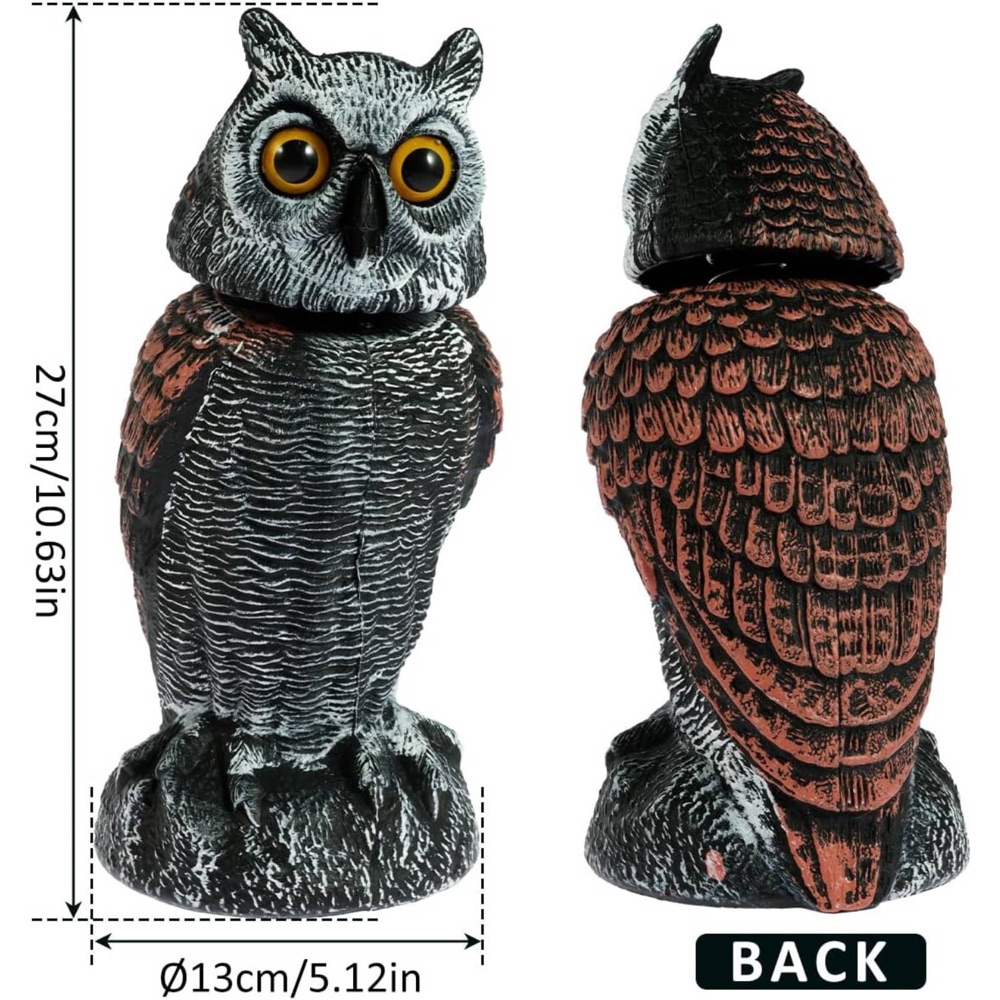
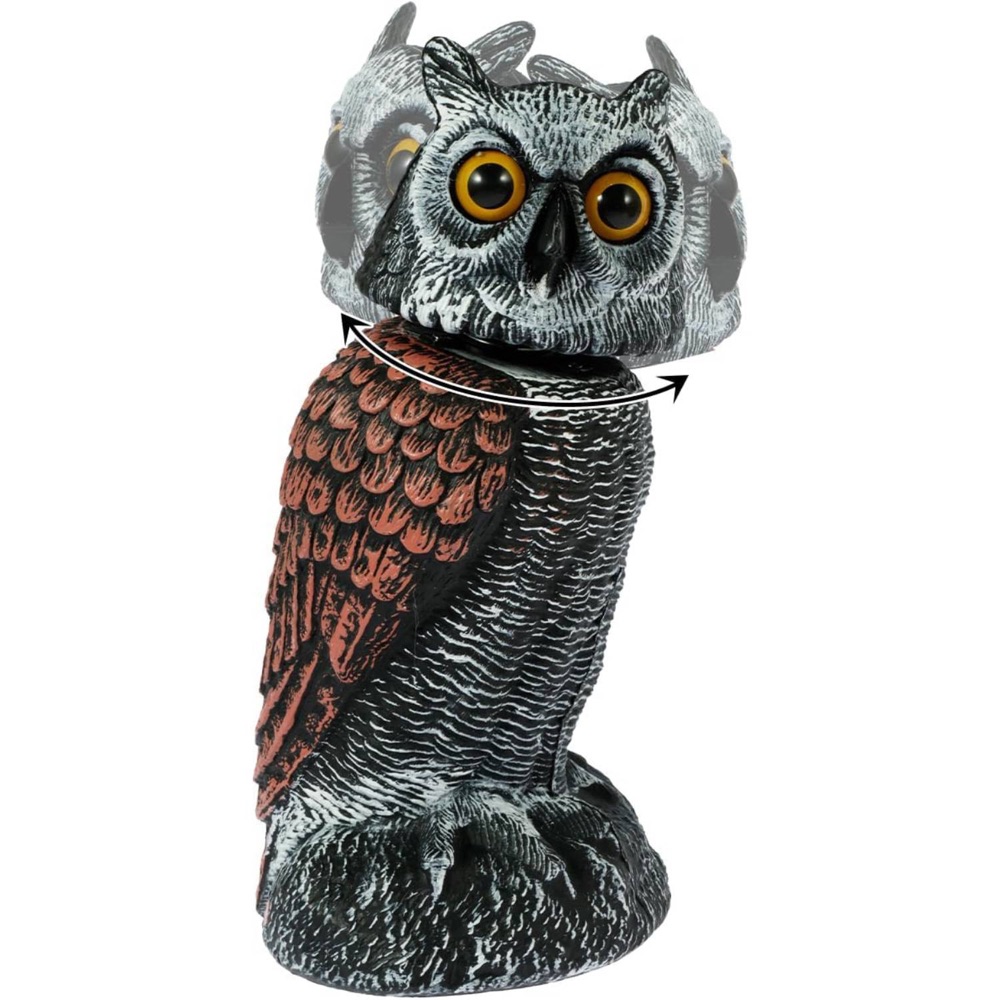
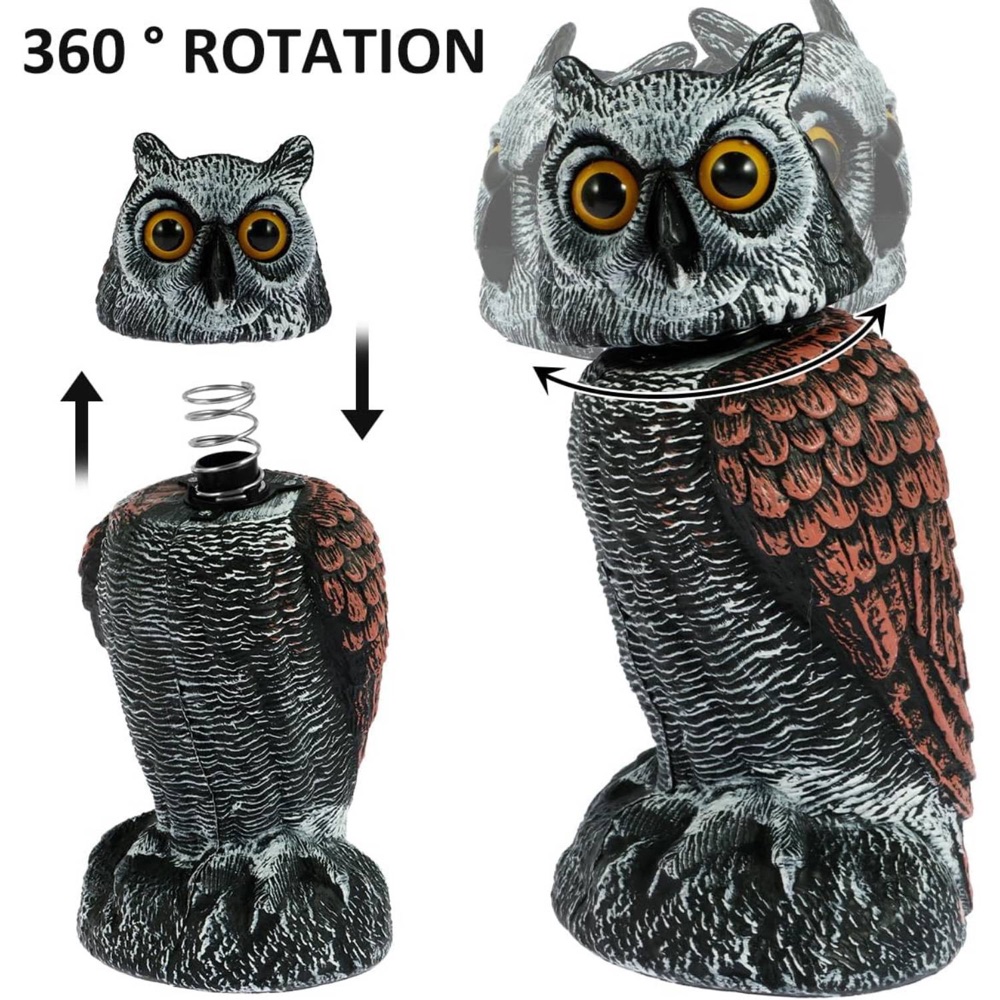
This particular owl adds the feature that matters most: movement. The head sits on a spring-loaded mount and rotates in the wind, so from a bird's point of view the predator is scanning. A decoy owl bird scarer that appears to look around is far more believable than a frozen statue, and believability is the entire game.
The Honest Part: What a Decoy Can and Cannot Do
Here is what most product pages will not tell you. Birds are not stupid. A pigeon that watches an owl stand in the same spot for three weeks, never flying and never hunting, will eventually land right next to it. Researchers call it habituation, boaties call it that seagull sitting on my expensive owl.
So set your expectations correctly. A fake owl to keep birds away is at its strongest early, before birds have committed to your place, and against skittish species that do not stick around to run experiments. It is weakest against an entrenched flock defending a roost they have used for months.
The good news is that both weaknesses have simple answers. First, move the owl every few days so the threat never becomes furniture. Second, for established roosts, pair the owl with physical deterrents like bird spikes, reflective discs or netting. The spikes make the ledge uncomfortable, the owl makes the whole area feel dangerous, and together they cover each other's gaps.
Which Birds Take the Hint
Small, nervous species respond best. Sparrows, finches, starlings and swallows are the classic customers, which makes this the best fake owl bird repellent for veggie gardens, sheds and eaves. Doves and pigeons that are still scouting will also think twice, and gulls hate a predator shape on a boat they were planning to use as a bathroom.
The flip side deserves a straight answer too. If you love your local wrens and want them at the feeder, remember the owl cannot tell friend from foe. Place it tight against the problem area, keep it far from feeders and bird baths, and put it away once the trouble ends. The friendly birds will return within days.
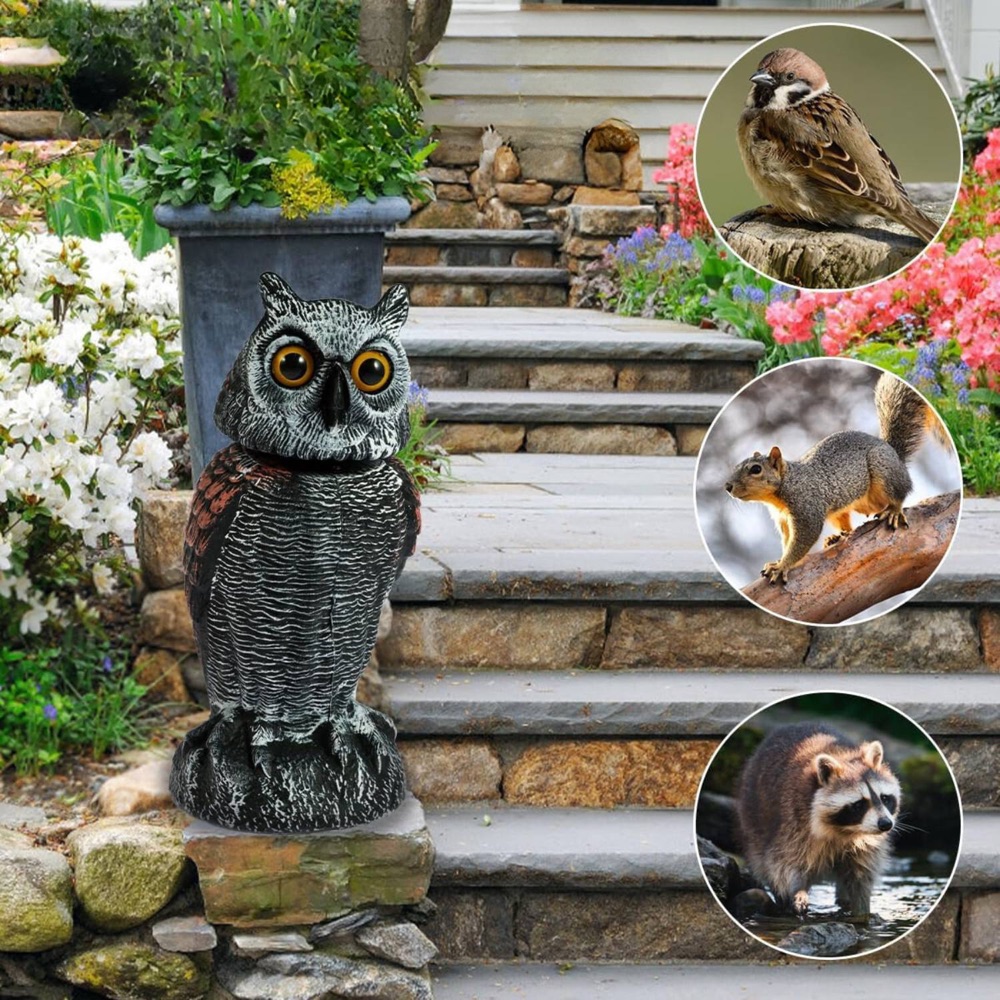
The listing also mentions squirrels and raccoons, which will interest overseas readers more than local ones. Around here, think of it as a bird tool first.
Where to Put Your Owl
Placement decides most of the result. Three rules cover it.
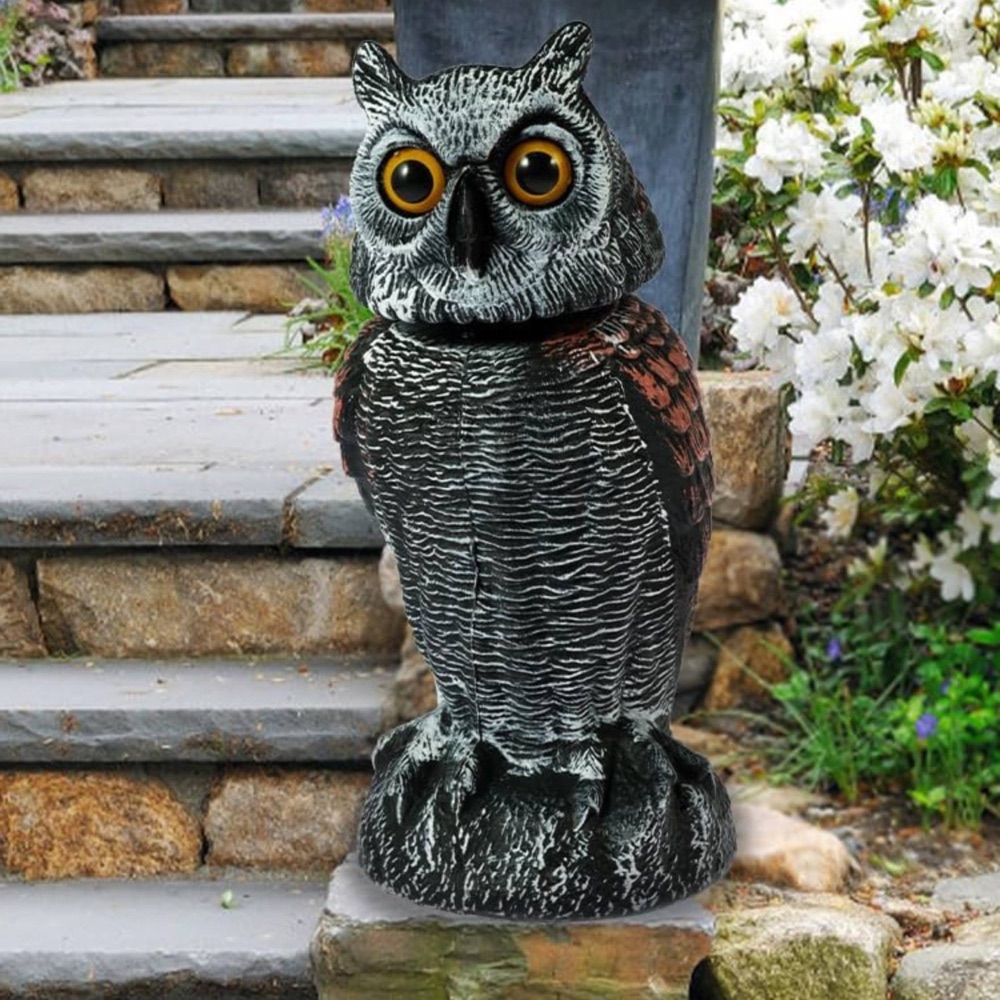
Make it visible. Birds have to see the owl from the air, so a high, open perch beats a shady corner every time. A fence post, pergola, carport beam or the top rail of a balcony all work. As a garden owl statue bird deterrent it looks perfectly natural on a retaining wall or beside the steps, which is exactly where the hero photo on this page was taken.
Put it near the problem. An owl at the far end of the yard does nothing for the fig tree at the near end. Guard the actual target: the veggie patch, the fruit tree, the shed door, the boat canopy.
Give it a view. A real owl perches where it can hunt. Mimic that and the picture reads as true. This is why the pole mount option matters, since the best owl scarecrow position is often a metre or two above the crop it is guarding.
For boats, clamp or tie a pole near the stern or sit the owl on the spreaders if access allows. Owners searching for the best owl decoy for boats usually want gulls off the canopy, and up high is where gulls make their decisions.
Setting It Up: Sand, Stakes and Sight Lines
Out of the box the owl weighs very little, which is great for postage and terrible in wind. The fix is built in. Flip the owl over, pull the plug out of the hollow base, and fill it with dry sand. Plug it back up and the owl now shrugs off the afternoon southerly. On a boat, weight is not optional, so fill it every time.
Prefer height? The same hollow base slides straight over a pole or garden stake. Drive the stake beside the beds, sit the owl on top, and your plastic owl scarecrow is suddenly visible from three backyards away. This is the set-up market gardeners use over rows of seedlings, and it doubles as the best owl decoy for vegetable garden duty because it clears the sight lines over growing plants.
Whichever way you mount it, check the head spins freely. That spring-loaded rotation is doing quiet work all day, and a jammed head turns your hunter back into a statue.
Keep It Believable: The Every Few Days Rule
If you take one habit from this guide, take this one. Move the owl every few days. Two metres is enough. Turn it to face a new direction, lift it higher, drop it lower, swap it from the fence to the pergola. Every change resets the question in a bird's head: is that thing alive?
Some owners run a simple rotation, three or four spots repeated on a loose schedule, and it takes thirty seconds a week. Others pack the owl away entirely for a fortnight when the birds have gone quiet, then redeploy it at the first sign of trouble. Both approaches beat leaving it bolted to one spot until the local pigeons name it.
Pairing the Owl with Other Deterrents
Serious infestations are rarely a one-product job, and pretending otherwise sells you short. The owl is the fear layer. Add a physical layer where birds actually land: spike strips on the ledge, parapet or beam so there is no comfortable footing. Add a light layer where they fly in: reflective repellent discs that flash and flicker in the sun. Netting closes off prize targets like ripening fruit.
A common combination for a home with a pigeon problem is spikes on the roosting ledge, the owl on a nearby post, and discs near the approach path. The best plastic owl for pigeons is the one working as part of that team, not standing alone against a flock with months of home-ground advantage.
Humane and Legal
Everything this owl does happens inside a bird's head. Nothing is trapped, poisoned, glued or hurt, which makes a decoy one of the most humane tools in bird control and a sensible first step before anything harsher. Native birds are protected by law, and a scare-only deterrent respects that completely. The one rule to remember is nesting season. If a bird already has an active nest with eggs or chicks, let the young fledge before you start deterring, then put the owl up so the family does not rebuild in the same spot next year.
Looking After It
There is not much on the list. The fade-resistant, water-resistant paint handles sun and rain, so the owl can stay out year round. Wipe it down with a damp cloth when it gets dusty. If you filled the base with sand, tip it out before winter storage so nothing sits damp inside. The head lifts off its spring for a quick clean of the joint, and that is the entire service manual.
The Bottom Line
A fake owl for patio, garden, shed or boat is cheap insurance against expensive mess. Give it height, give it a view of the target, fill the base or stake it, and move it every few days so it never becomes part of the scenery. Use it early, use it honestly, and back it with spikes or netting when a flock digs in. At $66 with a rotating head and a weatherproof finish, it is the easiest guard you will ever put on the payroll, and it never asks for a lunch break.